Cosmetic Dermatology
Skin Procedures Treatment in Greater Noida — Prakash Hospital
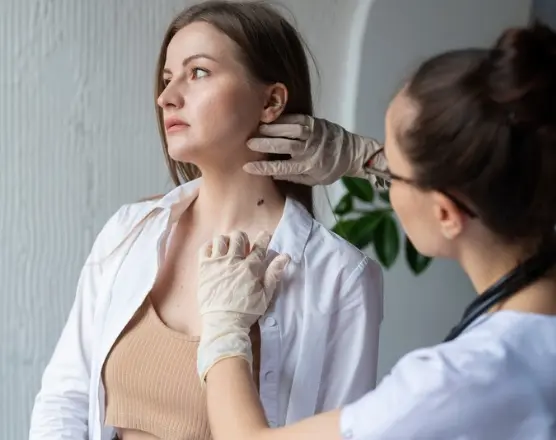
A mole that has changed, a wart that keeps returning, a skin tag that catches on clothing or a lump under the skin can all be worrying. Prakash Hospital offers skin procedures treatment in Greater Noida under the care of Dr. Mohna Chauhan, a dermatologist and cosmetic surgeon with more than 15 years of experience. Every procedure starts with a proper examination, so the decision to treat — and how — is based on what the growth actually is.
How We Treat
What Do Skin Procedures Include?
Skin procedures are minor, usually outpatient treatments used to remove, freeze, cauterise or sample a growth or lesion on the skin. They include removing moles, warts, skin tags, cysts and lipomas, and diagnostic tests such as a skin biopsy. Most are done under local anaesthesia, and many patients go home the same day.
A procedure is not always the first step. A skin specialist doctor first checks whether a spot or lump is harmless, infected, inflamed or needs further testing. Many concerns that bring people to a skin doctor in Greater Noida — such as skin allergy, dry skin, fungal skin infection or white patches on the skin — are usually managed with medicines and skincare rather than a procedure. Choosing the right path depends on an accurate diagnosis, which is why every skin care treatment at Prakash Hospital begins with a consultation.
Skin Procedures Treatment at Prakash Hospital
At Prakash Hospital, skin procedure consultations may address moles, warts, skin tags, cysts, lipomas and lesions that need a biopsy. The method is chosen after examination, based on the type, size and location of the growth and your medical history. Not every growth needs removal, and not every procedure suits every patient.
Mole Removal Treatment
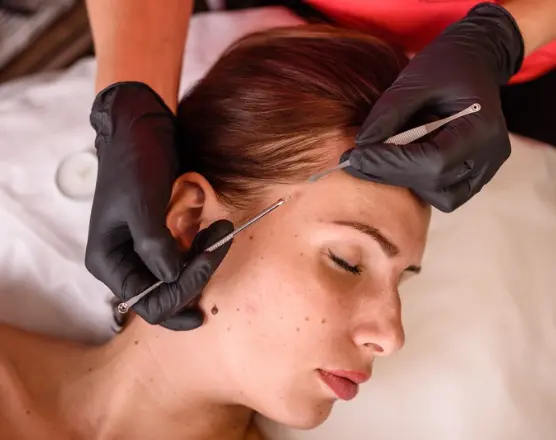
Moles are common clusters of pigment cells, and most are harmless. Removal may be advised when a mole changes in size, shape or colour, bleeds, itches, or becomes irritated by clothing or shaving. It is usually done by shave removal or a small surgical excision under local anaesthesia, and the tissue may be sent to a laboratory for testing. A mole that looks suspicious should be examined before any removal, rather than burnt off, so it can be properly assessed. Aftercare involves keeping the area clean and covered as advised, using sun protection, and returning for stitch removal if stitches were placed. A small scar is possible.
Wart Removal Treatment
Warts are rough skin growths caused by the human papillomavirus (HPV) and can spread to other areas or people. Treatment may be considered when warts are painful, spreading, persistent or bothersome. Options include prescribed topical medicines, cryotherapy and electrocautery, and several sessions may be needed. Warts can return even after successful treatment because the virus may remain in the skin. Avoid picking warts, keep feet dry and do not share towels or footwear. Warts in the genital area need separate medical evaluation.
Skin Tag Removal Treatment
Skin tags are small, soft, harmless flaps of skin, often found on the neck, armpits, eyelids and groin. They are usually removed when they catch on jewellery or clothing, bleed, or are a cosmetic concern. Removal may be done by snipping, electrocautery or cryotherapy, typically after numbing. Because skin tags can be linked with conditions such as diabetes or weight changes, the doctor may suggest relevant checks. Avoid cutting or tying off skin tags at home, as this can cause bleeding and infection.
Cyst Removal Treatment
A skin cyst is a closed sac under the skin, often filled with keratin; epidermoid cysts are a common type. Removal may be recommended if a cyst grows, keeps getting infected, causes discomfort or is visible in an awkward place. A planned surgical excision aims to remove the whole sac, which lowers the chance of it returning. An inflamed or infected cyst is often treated first with medicines or drainage, with removal planned once it settles. Do not squeeze a cyst, as this can push contents deeper and cause inflammation.
Lipoma Treatment
A lipoma is a soft, movable lump of fat cells that grows slowly under the skin and is usually harmless. Treatment is considered when a lipoma is painful, growing, in a visible area or when its nature is unclear. Small lipomas are usually removed by surgical excision under local anaesthesia. Larger or deeper lumps may need an ultrasound or other imaging before deciding on treatment, and the tissue may be sent for testing. Any lump that grows quickly, feels hard or is fixed in place should be examined promptly.
Electrocautery
Electrocautery uses controlled heat produced by an electric current to remove small growths and seal tiny blood vessels. It may be used for skin tags, some warts and selected benign lesions. The area is numbed first, and a small scab forms that usually falls off on its own as the skin heals. Tell the doctor beforehand if you have a pacemaker or other implanted device. Temporary redness and later lightening or darkening of the treated spot can occur, particularly in darker skin tones.
Cryotherapy
Cryotherapy freezes and destroys abnormal skin tissue, usually with liquid nitrogen. It may be recommended for warts, seborrhoeic keratoses and some other superficial lesions. Treatment takes seconds per spot and causes brief stinging; a blister or scab commonly forms and then heals over the following days to weeks. More than one session may be required. Possible side effects include pain, blistering and changes in skin colour at the treated site, so the doctor will assess whether it suits your skin type.
Skin Biopsy
A skin biopsy removes a small sample of skin so it can be examined under a microscope. It may be advised when a rash, patch, mole or growth cannot be confidently diagnosed by examination alone. Common methods are punch, shave and excisional biopsy, all done under local anaesthesia. The sample goes to a laboratory, and results usually take a few days. Keep the site clean and dry as instructed, and contact the hospital if you notice increasing redness, swelling, pus or fever.
What Happens During a Skin Procedure Consultation?
- Medical history review — how long the growth has been there, any changes, past treatments, allergies, current medicines (especially blood thinners) and conditions such as diabetes.
- Clinical skin examination — size, colour, texture, depth and location of the lesion, sometimes with a dermatoscope for closer inspection.
- Diagnosis and options — whether treatment is needed, which procedure may suit you, alternatives, possible side effects, scarring and the chance of recurrence.
- Procedure and aftercare guidance — consent, preparation, wound care, sun protection, laboratory results if a sample is sent, and follow-up.
Why Choose Us
Why Choose Prakash Hospital for Skin Procedures?
Having a skin procedure in a hospital setting means your growth is assessed carefully, treated with attention to safety, and referred on quickly if another specialist is needed.
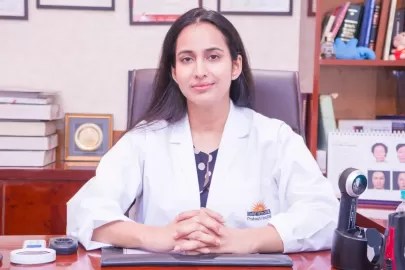
- 15+ years of experience — Dr. Mohna Chauhan, MBBS (Maulana Azad Medical College) and MD (Lady Hardinge Medical College), is a dermatologist and cosmetic surgeon with more than 15 years of experience.
- Hospital-based care — procedures take place within a multispecialty hospital, with access to laboratory testing and other departments when needed.
- Diagnosis before treatment — a procedure is recommended only after the lesion has been examined and, where needed, tested.
- Clear expectations — possible scarring, side effects, recovery and recurrence are explained before you decide.
FAQs
Frequently Asked Questions
Is cosmetic dermatology safe?
Cosmetic dermatology can be safe when treatment is selected after proper evaluation and performed by a qualified dermatologist. Every treatment has possible risks, so consultation and informed consent are important.
Which treatment is best for pigmentation or dark spots?
There is no single best treatment for every dark spot. A dermatologist can determine whether sunscreen, topical treatment, chemical peels, laser treatment or a combined plan is appropriate.
How many cosmetic dermatology sessions will I need?
The number of sessions depends on the concern, treatment chosen, severity, skin response and your goals. Pigmentation, acne scars and skin rejuvenation commonly require a series of appointments.
Are Botox and dermal fillers available at a hospital?
Yes. Botox and dermal fillers may be performed when treatment is provided by an appropriately qualified professional after consultation.
Can I get a HydraFacial if I have acne?
It depends on the type and severity of acne. Active inflamed acne, infection or irritation may need medical treatment first.
Where can I find cosmetic dermatology in Greater Noida?
Prakash Hospital provides cosmetic dermatology in Greater Noida for pigmentation, acne scars, rejuvenation, anti-aging treatments, microneedling, Botox, fillers, peels and selected laser treatments.
Book a Cosmetic Dermatology Consultation
Speak with Dr. Mohna Chauhan at Prakash Hospital for medically guided aesthetic skin care.