Understanding Knee Replacement Surgery
Two of the most common concerns patients bring to our orthopedic team in Greater Noida are: “Can I sit cross-legged after knee replacement?” and “Will I be able to climb stairs like before?” This page answers both questions honestly — drawing on clinical evidence and real patient experiences — so you know what to expect before, during, and after surgery.
This article digs into the truth behind these worries using medical evidence and real patient stories to separate facts from myths. Thanks to advanced surgical methods and focused recovery programs many patients can get back to doing things they enjoy, like sitting cross-legged or climbing stairs.
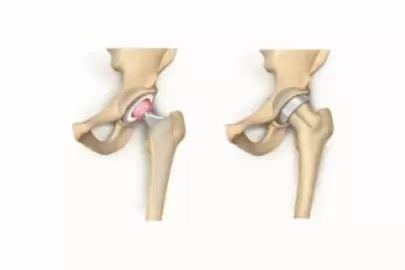
Doctors call knee replacement surgery Total Knee Arthroplasty (TKA). In this procedure, surgeons replace damaged parts of the knee joint with artificial pieces. The goal is to ease pain, fix deformities, and improve movement so life gets better for the patient.
Surgeons today use a range of implant types during knee replacements such as:
- Standard options
- High-flexion models
- Special designs for men or women
- Custom-made versions
An experienced knee replacement surgeon in Greater Noida can assess if high-flexion prostheses match your lifestyle preferences. These advanced implants aim to provide more knee bending, making activities like sitting cross-legged easier.
Years spent doing Fracture Surgery play a big role in handling tough knee replacement cases. This experience leads to precise implant placement, which is key to better knee movement.
Is Sitting Cross-Legged After Knee Replacement Possible?
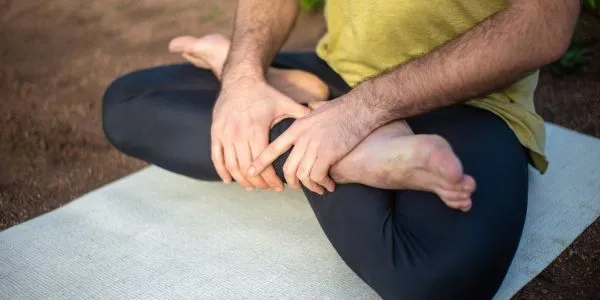
Many believe knee replacements prevent sitting on the floor or joining cultural activities. Studies prove that sitting cross-legged after this surgery is possible for many people when using high-flexion implants.
A detailed study with 248 patients showed that 76.6% could still sit cross-legged at their last follow-up after using high-flexion prostheses. The average knee bending improved a lot going from 97.62° before surgery to 132° one year later.
Many reasons have an effect on being able to cross legs after surgery:
- Pre-surgery flexibility – Patients who move better before surgery often see better results afterward.
- Implant type – Some designs allow for deeper bending making high-flexion easier.
- Surgical precision – Accurate placement of the implant and balancing soft tissues are key steps.
- Rehab dedication – Staying consistent with your recovery exercises plays a huge role.
- Body structure – A person’s bones and muscles can affect their outcome.
Though not every patient will experience it, gaining this ability back is possible for many when surgery and rehab are well-planned.
Safe Approaches to Climbing Stairs After Knee Replacement
Most people start climbing stairs after knee replacement surgery within the first week. Confidence tends to grow as days go by. Many assume stair climbing is off-limits, but it is included as part of rehab to help build strength.
This recovery happens step by step, like this:
- Days 1-3: Therapists guide patients in learning the right method.
- Days 4-14: Patients depend less on assistance.
- Weeks 2-6: They build endurance and feel more confident repeating the movements.
- After 6 weeks: Patients aim to climb stairs in a natural rhythm.
To start, the “up with the good leg down with the bad leg” technique is suggested.
- To go up, patients step first with the non-operated leg.
- To go down, they step first with the operated leg.
As their strength builds and they feel more confident, patients begin to switch to a regular stair-climbing rhythm. By three months after surgery many patients handle stairs more , though returning to a normal stair pattern often takes between six and twelve months.
How Long Does It Take to Climb Stairs Normally After Knee Replacement?
Most patients can climb stairs with support within the first week. By 4 to 6 weeks, many manage stairs independently with a railing. Returning to a fully natural stair-climbing pattern — alternating feet without holding on — typically takes 6 to 12 months for most people. Patients who experience ongoing difficulty climbing stairs after knee replacement beyond 3 months should speak with their surgeon, as implant alignment or therapy adjustments may help.
Understanding Knee Replacement Recovery Steps
New methods in knee replacement recovery emphasize moving and using rehab plans tailored to each patient. The recovery process moves through specific stages:
Phase 1: Right After Surgery (Days 1-7)
- Staying in the hospital for around one to three days
- Managing pain
- Practicing simple movements
- Walking with support tools
- Learning how to use stairs at a basic level
Phase 2: Early Healing (Weeks 2-4)
- Doing therapy at home or visiting a clinic
- Starting a gradual walking plan
- Beginning easy strength-building exercises
- Improving motion range in joints
- Using assistive tools less over time
Phase 3: Middle Stage of Healing (Months 2-3)
- Focusing on more advanced strength workouts
- Gaining better balance and control
- Training for everyday tasks
- Getting back to simple daily routines
- Walking more
Phase 4: Longer-Term Healing (Months 4-12)
- Go back to regular activities.
- Keep building strength.
- You might start doing low-impact sports again.
- You could sit cross-legged again, if it feels right.
- Notice final improvements in how your knee works.
Things like your age, health, and how dedicated you are to therapy play a big role in how long your knee takes to heal. While there’s a general timeline to guide you, everyone heals .
Week-by-Week Knee Replacement Recovery Timeline
Understanding the knee replacement recovery timeline helps patients set realistic expectations for their healing journey. Below is a data table showing typical milestones:
| Timeline | Physical Milestones | Functional Activities | Pain Level |
| Days 1-3 | • Standing • Walking• Basic knee flexion 0-60° | •• Basic self-care | Moderate to severe |
| Week 1 | • Walking with walker/crutches• Knee flexion 60-90°• Basic• Extended walking | Moderate | |
| Weeks 2-3 | • Transitioning to cane• Knee flexion 90-110° | • Independent• Stairs with minimal assistance• Short outdoor walks | Mild to moderate |
| Weeks 4-6 | • Walking• Knee flexion 110-120°• Driving (if right• Light household tasks | Mild | |
| Weeks 6-12 | •• Knee flexion 120-130°+ | • Return to work• Social activities | Minimal |
| Months 3-6 | • Improve• Near-normal g• Potential deep flexion | • Most•• Possible floor sitting | Occasional |
| Months 6-12 | • Potential cross-legged sitting | • Return to low-impact sports• Full independence | Rare |
The average recovery time for knee replacement varies, but most patients can resume basic activities within 4-6 weeks. Complete recovery, including maximum strength and range of motion, typically takes 6-12 months.
Essential Knee Replacement Recovery Exercises for Optimal Results
To regain strength and move better, you need to practice recovery exercises . A planned rehabilitation program plays a big role in helping you get back to normal function.
Some of the main exercises often involve:
- Quadriceps Sets
- Squeeze your thigh muscles while keeping your leg straight
- Hold the squeeze for a count of 5 to 10 seconds. Do this 10 to 15 times, three times every day
- Straight Leg Raises
- Lie flat on your back, tighten the thigh muscles in the operated leg, and lift it about 12 inches off the ground
- Hold the lift for 5 to 10 seconds. Repeat this 10 to 15 times, three times a day
- Heel Slides
- While lying on your back, bend your knee by sliding your heel towards your hip
- Pause in that position for 5 to 10 seconds before straightening. Repeat this 10 to 15 times, three times daily
- Seated Knee Flexion
- Sit and bend your knee as far as it goes
- Hold for a few seconds then return to starting position.
- Sit in a chair and bend your knee backward as much as feels okay.
- Keep it there for 5 to 10 seconds then do this 10 to 15 times. Repeat it three times a day.
- Standing Knee Bends
- Use something sturdy for support and bend your knee so your foot moves toward your backside.
- Stay in this position for 5 to 10 seconds and repeat it 10 to 15 times. Do this three times each day.
As people recover, they start doing harder exercises that build their strength, improve balance, and help them regain everyday abilities. A physical therapist plays a key role by guiding them to perform exercises and adjust them as needed.
Case Study: Mrs. Sushila Sharma Journey to Sitting Cross-Legged Again
Story: Mrs. Sushila Sharma Path to Sitting Cross-Legged
Mrs. Sushila, a 62-year-old woman living in Greater Noida, had total knee replacement surgery after struggling with bad osteoarthritis for more than 5 years. As someone involved in religious rituals that required sitting on the floor being able to sit cross-legged again meant a lot to her.
Her Situation Before Surgery:
- Experienced intense knee pain often an 8 out of 10.
- Could not sit on the floor in over three years.
- Needed help to climb stairs.
- Walking range restricted to under 200 meters.
Surgical Details:
Doctors implanted a high-flexion knee designed to meet Mrs. Sushila cultural requirements. They used less invasive methods to protect her soft tissues during the procedure.
Healing Process:
- Week 1: Started using a walker to walk on the first day after surgery.
- Week 3: Moved on to walking with a cane.
- Week 6: Reached 110° in knee bending ability.
- Month 3: Started practicing sitting on the floor in a modified way.
- Month 5: Managed to bend the knee to 125°.
- Month 8: Could sit cross-legged briefly without trouble.
- Month 12: Sat cross-legged during 45-minute prayer sessions.
Patient Experience: “I had lost hope of ever being able to sit on the floor again to pray each day. The surgery and rehab program let me reclaim a vital part of my routine. Now I can sit cross-legged and even climb stairs without discomfort or fear. I’m thankful for the care I was given.”
This example shows how proper surgical preparation, the right choice of implants, and committed rehab can help patients resume meaningful activities like sitting cross-legged.
Cutting-Edge Knee Replacement Procedures
Prakash Hospital is among the best orthopedic hospitals in Greater Noida. It provides modern facilities to carry out advanced joint replacement procedures. Their care covers everything from pre-surgery evaluations to the recovery process.
Surgeons today use several advanced methods:
- Minimally Invasive Surgery
- Uses smaller cuts
- Causes less harm to tissues
- Helps patients heal quicker
- Computer-Assisted Surgery
- Improves accuracy
- Helps place implants better
- Leads to better patient results
- Patient-Specific Tools
- Creates custom surgery tools
- Based on scans done before surgery
- Makes alignment more precise
- High-Flex Implants
- Made to allow more movement
- Suits cultural needs that require deep bending
- Lets people perform actions like sitting cross-legged
The hospital uses a well-rounded strategy to treat patients.
- Conducting a thorough evaluation before surgery
- Creating a surgery plan tailored to the patient’s needs
- Using ERAS methods to speed up recovery
- Developing step-by-step rehab plans
- Providing ongoing care through scheduled check-ups
This combined method leads to the best results and supports patients in meeting their physical targets. These can include things like climbing stairs on their own or sitting cross-legged for cultural reasons.
Frequently Asked Questions
Q: Can you sit cross-legged after knee replacement surgery?
A: Yes, many patients can sit cross-legged after knee replacement, especially with high-flexion implants. Studies show around 75–77% of patients with these implants regain this ability over time. It usually becomes possible 6 to 12 months after surgery, once knee bending reaches at least 120°
Q: Why is climbing stairs difficult after knee replacement?
A: Difficulty climbing stairs after knee replacement is completely normal in the early weeks. The muscles around the knee are healing, and the joint needs time to regain strength and coordination. With guided physiotherapy, most patients see significant improvement within 4 to 6 weeks.
Q: How soon can you climb stairs after knee replacement?
A: Most patients begin stair practice with a physiotherapist within the first 3 days after surgery. Independent stair climbing with a railing is usually possible by weeks 4 to 6.
Q: Does sitting cross-legged damage a knee replacement?
A: With the right implant type and adequate healing, sitting cross-legged does not damage the replacement. However, patients should always consult their surgeon before attempting deep-flexion positions like this.
Q: What type of knee implant allows sitting cross-legged?
A: High-flexion knee implants are designed to allow deeper bending of the knee — typically beyond 120° — which makes positions like sitting cross-legged more achievable. Your surgeon in Greater Noida can advise whether this type of implant suits your lifestyle.
Conclusion
Sitting cross-legged and climbing stairs after knee replacement isn’t just a myth. Many patients can achieve these movements. Improved surgical methods better implant designs, and updated recovery plans make these goals reachable for the right candidates.
People in Greater Noida and Noida looking into knee replacement surgeries can find skilled orthopedic doctors and all-around care nearby. Consulting an experienced orthopedic doctor in Greater Noida ensures personalized treatment and guidance. Recovery takes time, focus on rehab, and solid advice from experts. The benefits, though, can include less pain and a chance to get back to activities people care about.
If your knee pain is affecting how you move and enjoy life, talk to a specialist to learn about treatment options. consult an orthopedic surgeon in Greater Noida could help you walk without pain, go up stairs with ease, or even sit cross-legged like before.