Baby Eczema: Symptoms, Causes, Treatment & Gentle Skin Care Tips
Why Your Baby’s Soft Skin Suddenly Turned Red and Rough
You notice it during a bath or a cuddle: dry, red patches on your little one’s cheeks that were not there last week. Your baby rubs their face against your shoulder and seems fussier at night. For many parents, this is their first meeting with baby eczema.
The good news is that you are not alone, and your baby is not in danger. Eczema is one of the most common skin conditions in infancy. It can be managed well with the right routine and timely medical guidance.
In this guide, our dermatology team at Prakash Hospital explains how to tell eczema apart from other common infant rashes. We also cover what triggers it, how doctors treat it, and the gentle skin care habits that make a real difference at home.
Table of Contents
What Exactly Is Baby Eczema? A Simple Explanation for Parents
Baby Eczema, known medically as atopic dermatitis, is a long-term inflammatory skin condition. It makes the skin dry, itchy, and easily irritated. It is not contagious, so it cannot spread from your baby to siblings or other children.
Healthy skin works like a brick wall. Skin cells are the bricks, and natural oils and fats are the mortar holding them together. In babies with eczema, this barrier is weaker. Moisture escapes easily, and irritants, allergens, and germs get in more easily. The result is dryness, inflammation, and itching.
Eczema usually appears within the first six months of life, often between two and four months. Research suggests it affects up to one in five children at some point. Many babies see their symptoms improve significantly as they grow, and a large number outgrow it by school age.
It also tends to run in families. If a parent or sibling has eczema, asthma, or hay fever (allergic rhinitis), the chance of a baby developing eczema is higher.
Spotting the Signs: What an Eczema Rash on Baby Face and Body Looks Like
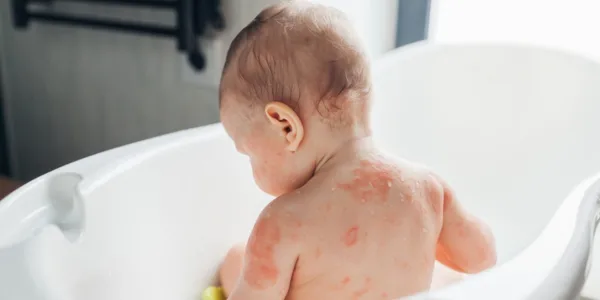
Eczema does not look identical in every child, and it changes with age. Still, most babies show a familiar set of signs:
- Dry, rough, or scaly patches of skin
- Redness on lighter skin; on brown or darker skin, patches may look darker brown, purple, or ashen grey
- Intense itching, which shows up as rubbing, scratching, or restlessness
- Small bumps that may ooze clear fluid and then crust over during a flare
- Thickened, leathery skin in areas that have been scratched for a long time
- Poor sleep and irritability, often worse at night
Why Baby Eczema on Face Is So Common
In the first months of life, baby eczema on face is the classic starting point. The cheeks, forehead, and chin are exposed to drool, milk, food, wind, and constant rubbing against bedding. All of these weaken an already delicate skin barrier.
An eczema rash on baby face usually starts as rough, pink or red patches on the cheeks. The area around the nose and the nappy area is often spared. As babies begin crawling, the rash commonly spreads to the scalp, neck, outer arms, and the fronts of the legs.
How the Rash Changes with Age
| Age Group | Common Locations | Typical Appearance |
|---|---|---|
| 0–6 months | Cheeks, forehead, scalp, chin | Red, dry, sometimes weepy or crusty patches |
| 6–12 months | Face, outer elbows, knees, trunk | Dry, scaly patches; more scratching as hand control improves |
| 1–2 years | Elbow and knee creases, wrists, ankles, neck | Drier, thicker patches; face often clears |
| 2+ years | Skin folds, hands, feet, around eyes | Thickened, leathery skin from repeated scratching |
The Real Story Behind Baby Eczema Causes and Common Triggers
Parents often ask, “What did I do wrong?” The honest answer is: nothing. There is no single cause. Baby eczema causes are a mix of genetics, the immune system, and the environment working together.
Underlying Causes
- Genetics and family history: Babies with a parent or sibling who has eczema, asthma, or allergies are at higher risk.
- Weak skin barrier: Some babies have changes in a skin protein called filaggrin. This makes the skin lose water faster and let irritants in.
- Overactive immune response: The immune system reacts strongly to everyday substances, causing inflammation and itch.
- Skin microbiome imbalance: Eczema-prone skin often carries more Staphylococcus aureus bacteria, which can worsen flares.
Everyday Triggers That Cause Flare-Ups
Triggers do not cause eczema, but they can make an existing rash worse. Common ones include:
- Dry air, cold weather, or sudden temperature changes
- Heat and sweating, especially in humid Indian summers
- Saliva, milk, and food residue on the face
- Harsh soaps, bubble baths, and perfumed products
- Wool or rough synthetic fabrics
- Scented detergents and fabric softeners
- Dust mites, pet dander, and pollen
- Illness or teething, which can temporarily lower skin resilience
What About Food Allergies?
Some infants with moderate to severe eczema also have food allergies, most often to cow’s milk, egg, or peanut. However, food is rarely the main cause. Please do not remove foods from your baby’s diet or a breastfeeding mother’s diet without medical advice. Unnecessary restrictions can affect growth and nutrition.
Is It Eczema or Something Else? A Quick Rash Comparison
Not every red patch is eczema. Several infant skin conditions look similar, and the right care depends on the correct diagnosis. This table can help you understand the differences, but a doctor’s examination is always the final word.
| Condition | Typical Age | Where It Appears | How It Looks | Itchy? |
|---|---|---|---|---|
| Eczema (atopic dermatitis) | 2 months onwards | Cheeks, scalp, skin creases, limbs | Dry, rough, red or darker patches; may ooze | Yes, often intense |
| Cradle cap (seborrhoeic dermatitis) | 0–3 months | Scalp, eyebrows, behind ears | Greasy, yellow, flaky scales | Usually not |
| Baby acne | 2–6 weeks | Cheeks, nose, forehead | Small red or white bumps | No |
| Heat rash (miliaria) | Any age, hot weather | Neck, chest, back, skin folds | Tiny clear or red dots | Mildly prickly |
| Nappy (diaper) rash | 0–2 years | Nappy area | Red, shiny, sore skin | Sore more than itchy |
| Contact dermatitis | Any age | Where an irritant touched the skin | Red patch with clear borders | Yes |
A useful clue: if the rash is very itchy, keeps returning, and your family has a history of allergies, eczema is the more likely explanation.
How Doctors Diagnose and Treat Baby Eczema Safely
Diagnosis
There is no single blood test for eczema. A paediatric dermatologist diagnoses it by examining the skin, noting where the rash appears, and asking about itching, family history, and triggers. Allergy testing is suggested only in specific cases, such as severe eczema that does not respond to treatment or a clear reaction after eating a certain food.
Treatment Options
The goal of treatment is to calm the flare, stop the itch-scratch cycle, and repair the skin barrier. Your doctor will create a plan based on your baby’s age and how severe the rash is.
| Treatment | What It Does | When It Is Used |
|---|---|---|
| Emollients and moisturisers | Restore moisture and strengthen the skin barrier | Daily, even when skin looks clear |
| Mild topical corticosteroids | Reduce redness, swelling, and itching | Short courses during flares, as prescribed |
| Non-steroidal topical creams | Control inflammation, especially on the face and folds | Selected cases, under specialist guidance |
| Wet wrap therapy | Locks in moisture and soothes intense itch | Moderate to severe flares, as advised by a doctor |
| Antibiotics or antiseptic care | Treat infected, oozing, or crusted skin | Only when a bacterial infection is suspected |
| Oral antihistamines | May help with sleep if itching disturbs rest | Occasionally, on a doctor’s advice |
Many parents worry about steroid creams. When used in the right strength, amount, and duration under medical supervision, mild steroid creams are considered safe for babies. The real risk comes from using strong creams bought over the counter or continuing them for weeks without review. This is especially important for delicate facial skin.
Avoid home remedies such as applying raw milk, lemon, or unverified herbal pastes to the rash. These can irritate the skin further or cause infection.
Gentle Skin Care Tips That Keep Flare-Ups Away
Medicines calm a flare, but daily care at home keeps the skin healthy between flares. These simple habits are the backbone of managing eczema in infants.
1. Bathe Smart, Not Long
Give a short bath of 5–10 minutes in lukewarm water, not hot. Use a mild, fragrance-free, soap-free cleanser only where needed. Pat the skin dry with a soft towel instead of rubbing.
2. Follow the “Soak and Seal” Rule
Apply a thick, fragrance-free moisturiser within three minutes of the bath, while the skin is still slightly damp. Ointments and thick creams usually work better than thin lotions. Moisturise at least twice a day, even on days when the skin looks clear.
3. Protect the Face from Drool and Food
Gently wipe away saliva and milk with a soft, damp cloth, then apply a thin layer of barrier cream. This one step can make a big difference for babies prone to facial eczema.
4. Dress for Comfort
Choose loose, breathable cotton clothing. Avoid wool and scratchy fabrics. Do not overdress your baby, as sweating can trigger itching.
5. Keep Little Nails Short
Trim nails regularly and use soft cotton mittens at night. This reduces skin damage and the risk of infection from scratching.
6. Choose Laundry Products Carefully
Wash baby clothes and bedding in a mild, fragrance-free detergent. Rinse them twice and skip fabric softeners.
7. Maintain a Comfortable Room
Keep the room cool and well ventilated. In dry winter months, a humidifier may help. Dust regularly to reduce dust mites.
8. Patch Test New Products
Before using any new cream or cleanser, test a small amount on a tiny area of skin for 24–48 hours.
Keeping a simple diary of flares, foods, weather, and new products can help you and your doctor spot personal triggers faster.
When to See a Dermatologist Without Delay
Mild eczema often settles with good home care. However, please consult a doctor promptly if you notice any of the following:
- The rash spreads quickly or does not improve after 1–2 weeks of regular moisturising
- Yellow crusts, pus, weeping, or a sudden increase in redness, which may signal infection
- Clusters of painful, punched-out blisters or sores; this can be a rare but serious herpes infection called eczema herpeticum and needs urgent care
- Fever, unusual sleepiness, or your baby seems unwell
- Itching that disturbs sleep night after night
- Poor feeding, slow weight gain, or a reaction after a particular food
Expert Eczema Care at Prakash Hospital
At Prakash Hospital, our Dermatology and Venereology department offers child-friendly care for eczema and other infant skin concerns. Every treatment plan is tailored to your baby’s age, skin type, and triggers.
Dr. Mohna Chauhan, our experienced dermatologist, works closely with parents to explain each step, from choosing the right moisturiser to using prescribed creams safely. The focus is on consistent daily skin care alongside medicine, because both matter equally. With the right guidance, most babies enjoy calm, comfortable skin and better sleep.
Frequently Asked Questions About Baby Eczema
1. Is baby eczema contagious? No. Eczema cannot spread through touch, sharing towels, or playing together. Only a secondary infection on top of eczema can be contagious.
2. Eczema rash baby vs. heat rash: how can I tell the difference? Heat rash appears as tiny dots in sweaty areas and fades once the baby cools down. Eczema forms dry, rough, itchy patches that persist and keep returning.
3. Will my baby outgrow eczema? Many children improve greatly by the age of 3–5 years, and a large number outgrow it by school age. Some may continue to have dry, sensitive skin later in life.
4. Can breastfeeding help prevent eczema? Breastfeeding offers many health benefits, but evidence that it prevents eczema is mixed. Mothers should not change their diet without advice from a doctor.
5. Is coconut oil good for baby eczema on face? Some parents find virgin coconut oil soothing for mild dryness. However, it may not suit every baby. A fragrance-free emollient recommended by your dermatologist is usually a safer first choice.
6. Can I use steroid cream on my baby’s face? Only if prescribed. Doctors usually recommend a mild strength for a short time on the face. Never use leftover adult creams or strong over-the-counter products.
7. How often should I bathe a baby with eczema? Daily short baths or bathing every other day are both fine. What matters most is lukewarm water, a gentle cleanser, and moisturising right after.
8. Can teething make eczema worse? Yes, it can. Extra drool during teething irritates the skin around the mouth and chin. Wipe gently and apply a barrier cream often.
Final Thoughts: Calm Skin, Happy Baby
Watching your baby itch and struggle to sleep is hard, but eczema is manageable. Understanding the symptoms, knowing the triggers, and following a gentle daily routine can prevent most flare-ups. Treatment works best when it starts early and follows a clear plan.
If you notice a persistent rash, early medical advice brings faster relief. Book a consultation with Dr. Mohna Chauhan at Prakash Hospital for expert, compassionate care for your little one’s skin.

- Baby Eczema - September 30, 2026
- How to Get Fair Skin - September 28, 2026
- Best Hand Creams for Dry Skin - September 24, 2026