What Causes Skin Discoloration After Fracture Surgery?
Skin color changes can happen after fracture surgery in many ways. Knowing these reasons can ease worries while healing:
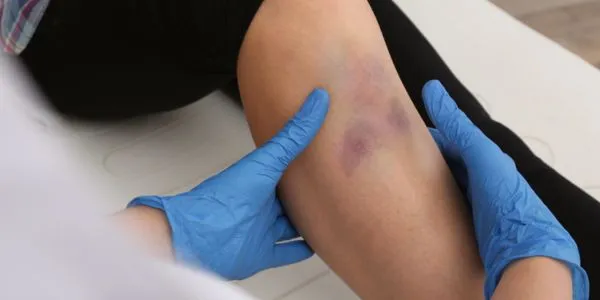
Bruising (Ecchymosis)
Bruising shows up most often after fracture surgery. It happens when blood escapes from damaged blood vessels during the procedure. That blood gets trapped under the skin and leaves purplish or bluish spots, which shift to other colors as the body repairs itself.
Postinflammatory Hyperpigmentation (PIH)
Inflammation on the skin during surgery causes this kind of discoloration. It happens because the body makes too much melanin. This can look like brown spots on the top layer of skin (epidermal) or bluish-gray colors in deeper layers (dermal). People with darker skin tones (Fitzpatrick types III to VI) are more likely to deal with PIH.
Discoloration from Metallosis
Sometimes metal implants can lead to discoloration near a fracture. This happens because tiny bits of metal from the implant spread out and create a “tattooing” effect on the skin. This occurs with certain kinds of metal prosthetics.
Changes Triggered by Medication
Certain medications given during or after surgery might lead to changes in skin color. For instance, minocycline, an antibiotic often given after orthopedic procedures, has been linked to skin discoloration in about 0.08% of cases.
Is Skin Discoloration Normal? Understanding the Healing Process
Patients often feel concerned about changes in skin color after surgery, but most of the time, it is part of the healing process. Here’s what happens:
How Colors Change Over Time
Bruising after surgery shows a regular pattern of color changes as the body heals:
- Reddish or purplish shade (days 1-2)
- Deep blue or purple tone (days 2-5)
- Greenish hue (days 5-7)
- Yellowish-brown tint (days 7-10)
- Slow lightening (days 10-14 or more)
Healing times might differ depending on surgery intensity, your age, your overall health, and if you’re using blood thinners.
Healing Timeline
Bruising from a fracture starts fading within two to three weeks. For some people with darker skin, pigmentation changes might stick around for months. If your other healing signs are looking good, this extra time doesn’t always mean something’s wrong.
When to Be Concerned: Abnormal Discoloration Signs
Discoloration is normal after a fracture, but some signs mean you should see a doctor . You should visit the top orthopedic doctor in Greater Noida if you notice any of these:
Things to Watch For
- Skin turning pale white, which might mean blood flow is not normal
- Dark black patches that don’t change like regular bruises
- Discoloration that moves or spreads too far from the surgery area
- Skin that changes color along with more pain, warmth, or swelling
- Red lines spreading outward from the surgery site
- Skin feeling colder than it should
These problems might point to issues like infection, blood flow problems, or something serious like compartment syndrome. A doctor should check this as soon as possible.
Treatment Options for Post-Surgery Skin Discoloration
Skin discoloration after surgery often fades on its own over time. Still, some methods may help deal with discoloration that sticks around.
Professional Treatments
To address ongoing pigmentation problems, options include:
- Using creams like hydroquinone, retinoids, or azelaic acid
- Trying chemical skin peels
- Undergoing laser procedures
At-Home Remedies
- Use cold compresses during the first two days to limit bruising.
- Keep the injured limb raised to ease swelling and lighten discoloration.
- After your doctor gives the okay, try a soft massage to help clear up the bruising.
- Protect your skin from the sun to stop darkened areas from getting worse.
- Applying creams with Vitamin K might help bruises heal faster.
Make sure to talk to your orthopedic doctor before starting any treatments to address skin changes after surgery.
The Importance of Healthy Bones in Recovery
Healing well after fracture surgery requires strong bones. The importance of healthy bones goes beyond just faster healing—they also influence how the skin and surrounding tissues recover during the healing process.
How to Support Bone Health with Nutrition
- Foods rich in calcium include dairy products leafy green vegetables, and fortified items.
- Sunlight, fatty fish, and supplements (if suggested by a doctor) provide Vitamin D.
- Protein helps repair tissues.
- Vitamin C supports making collagen.
- Zinc and magnesium assist in cell functions.
Lifestyle Tips
- Do weight-bearing exercises if your doctor approves them.
- Stay away from smoking and drinking too much alcohol.
- Keep a healthy weight, which eases pressure on bone healing.
Focusing on bone health can help patients heal faster and improve issues like skin discoloration and other problems after surgery.
Patient Experience: A Case Study
Case: 45-year-old Male with Ankle Fracture
Background:
Arif, a 45-year-old man living in Noida, had surgery on his ankle to fix a tough fracture at Prakash Hospital.
Concern:
Two weeks after the procedure, Arif saw his lower leg, from the ankle up to the middle of his calf turning purple and yellow. Worried about what he saw, he booked another visit with his doctor.
Assessment:
After checking him, the orthopedic team said the discoloration was just normal bruises moving upward due to gravity. The rest of his recovery signs looked good, with no infections or issues showing up.
Management:
The doctors explained to Arif that his symptoms were expected and nothing to worry about. They told him to keep elevating his leg, use cold packs, and continue doing the physical therapy exercises recommended for his recovery.
Result:
By the sixth week after surgery, most of the discoloration went away. Arif broken bone repaired , and he got back to his usual routine by the third month.
Patient’s Thoughts:
“At first, I felt anxious seeing so much bruising. The staff at Prakash Hospital explained everything to me and helped me understand it was typical. Their skill and encouragement played a big role in how I recovered.”
Normal vs. Abnormal Discoloration: Comparison Table
| Characteristic | Normal Discoloration | Abnormal Discoloration (Seek Medical Attention) |
| Color | Red, purple, blue, green, yellow, brown | Pale white, dark black, bright red streaks |
| Pattern | Localized to surgical area, may track downward with gravity | Rapidly spreading, extending far beyond surgical site |
| Timing | Appears within days of surgery, changes color over time | Sudden appearance after initial recovery, no color changes |
| Associated Symptoms | Mild swelling, mild tenderness | Severe pain, excessive warmth, fever, discharge |
| Sensation | Normal sensation in surrounding areas | Numbness, tingling, loss of function |
| Temperature | Skin feels normal or slightly warm | Skin feels unusually cool or very hot |
| Duration | Gradually improves over 2-4 weeks | Persists or worsens beyond 4 weeks |
Why Choose This Healthcare Facility
Recovering from fractures and managing issues like unusual skin color changes mean you need a Best orthopedic hospital in Greater Noida. Prakash Hospital provides:
- Full orthopedic support from the first check-up to complete recovery
- High-end diagnostic tools to tell apart normal recovery signs from possible complications
- A skilled team of surgeons focusing on tricky fracture treatments
- Tailored care plans that meet the needs of each patient
- Ongoing care and monitoring to check the healing process
- Handy educational tips to make home care easier
Led by expert orthopedic specialists, Prakash Hospital has built a strong reputation as a trusted place to treat bone and joint issues in Greater Noida.
Frequently Asked Questions
How much time does it take for discoloration of skin to go away after fracture surgery?
Most of the bruises and skin discoloration start fading about two to three weeks after surgery. Pigmentation changes can stick around for a few months in people with darker skin.
Can I make post-surgery bruising go away faster?
The body needs time to recover on its own, but you can try a few things to help. Keeping the area raised using cold compresses during the first two days, and light massage—if your doctor allows it—might speed things up.
Does having a lot of bruises mean something went wrong?
not. Bruising can depend on things like the surgery type, your age, your skin, or whether you take medicine that affects blood clotting. On its own heavy bruising doesn’t often mean there’s a big problem.
When should I worry about skin color changes after fracture surgery?
You should see a doctor right away if you see pale white or dark black patches, bruises spreading more pain or swelling, red streaks, discharge high temperature, or if the area feels cold.
Will skin color changes stay forever?
Most of the time, skin color returns to normal after surgery. But some people those with darker skin tones or those who don’t protect healing skin from the sun, might deal with longer-lasting dark spots.
Conclusion
Skin discoloration after fracture surgery happens as part of healing. Recognizing what changes are normal and knowing when to ask a doctor can ease worries during recovery. Healthy bones play a big role in how well and how fast recovery goes since they assist in quicker and complete healing.
If post-surgery skin changes are troubling, you can talk to a Best orthopedic doctor in Greater Noida to get advice suited to your condition. At Prakash Hospital, the team focuses on helping patients every step of the way starting from surgery to regaining regular movement and routines.
Keep in mind that every patient heals , and what seems normal may differ depending on personal circumstances. If you are unsure, contact your doctor to get advice tailored to your needs.