You step out of bed and feel a sharp sting under your heel, as if a small stone is stuck in your skin. You check your sole and find a rough, hard spot that wasn’t there a few weeks ago. For many people, this is their first meeting with a plantar wart.
Plantar warts are very common, harmless in most cases, and often go away on their own. But they can hurt, spread, and keep coming back. This guide explains how to recognise them, why they appear, and which plantar wart treatment options have real evidence behind them. It is written to help you make informed choices, not to replace an examination by a doctor.
Table of Contents
What Is a Plantar Wart? A Simple Explanation
So, what is a plantar wart? It is a small, non-cancerous skin growth on the sole (the “plantar” surface) of the foot. It is caused by an infection of the top layer of skin with certain types of human papillomavirus (HPV). Doctors also call it a verruca plantaris, or simply a verruca.
Warts elsewhere on the body tend to grow outward. Plantar warts on feet behave differently. Your body weight presses them inward, so a thick layer of hard skin forms over them. That is why they often look flat and feel like walking on a pebble.
They can appear in two main patterns:
- Solitary wart: a single wart that may slowly grow larger.
- Mosaic warts: a cluster of small warts that join into a patch. These are often harder to treat.
Plantar warts can affect anyone, but they are most common in children, teenagers and young adults.
Plantar Wart Symptoms: Signs Your Feet Are Trying to Tell You
Most plantar wart symptoms are easy to miss at first. The wart usually starts small and slowly becomes more noticeable over weeks or months. Look out for:
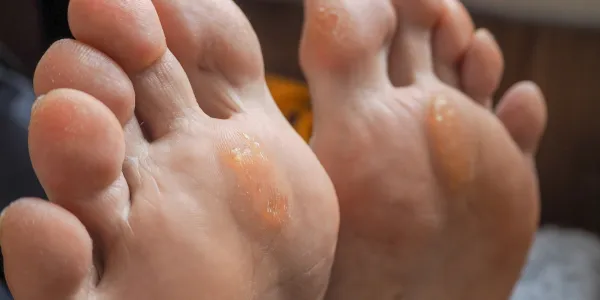
- A small, rough, grainy bump or flat patch on the sole, heel or ball of the foot
- Hard, thickened skin (like a callus) over a well-defined spot
- Tiny black or dark brown dots on the surface
- Pain or tenderness when standing, walking or running
- Pain that is worse when you squeeze the spot from side to side
- Skin lines (the natural ridges of your sole) that go around the lesion instead of through it
Why Is My Plantar Wart Black?
A plantar wart black dot appearance is one of the most typical signs. These dots are not dirt, and they are not “seeds”. They are tiny blood vessels (capillaries) that have clotted inside the wart. When the hard top layer is gently pared, these pinpoint dots, and sometimes slight bleeding, become visible.
However, a dark or black spot on the foot is not always a wart. A mole that changes shape, colour or size, a spot that bleeds without injury, or a dark streak under a toenail should be checked by a doctor promptly. Rarely, skin cancers such as melanoma can appear on the sole and be mistaken for a wart.
Plantar Wart, Corn or Callus? How to Tell the Difference
Warts, corns and calluses can look alike, which is one reason self-diagnosis often goes wrong.
| Feature | Plantar wart | Corn | Callus |
|---|---|---|---|
| Cause | HPV infection | Pressure or friction | Repeated pressure or friction |
| Skin lines | Interrupted; pass around it | Continue through it | Continue through it |
| Black dots | Often present | Absent | Absent |
| Pain pattern | Worse when squeezed sideways | Worse with direct pressure | Usually painless or mild |
| Spreads to others | Yes, can spread | No | No |
| Typical site | Heel, ball of foot, under toes | Tops and sides of toes, sole | Broad weight-bearing areas |
What Causes Plantar Warts? The Virus Behind the Pain
If you’re wondering what causes plantar warts, the answer is a virus, not poor hygiene alone. Certain strains of HPV (commonly types 1, 2, 4, 27 and 57) infect the outer skin of the foot. These are different from the HPV types linked to cervical cancer.
The virus enters through tiny cuts, cracks or soft, moist skin. It thrives in warm, damp places, so it is often picked up from:
- Swimming pool decks and changing rooms
- Shared showers in gyms, hostels and hotels
- Walking barefoot in public places
- Sharing towels, socks or footwear
The virus can stay silent in the skin for weeks or months before a wart appears. That is why it is often hard to know where it came from.
Who Is More Likely to Get Them?
Not everyone exposed to HPV develops a wart. Your immune system plays a big part. You may be at higher risk if you:
- Are a child or teenager whose immune system is still building defences against HPV
- Have had warts before
- Walk barefoot often in shared spaces
- Have sweaty feet (hyperhidrosis) or cracked skin on the soles
- Have a weakened immune system due to illness or medicines such as steroids or post-transplant drugs
- Have diabetes or poor circulation, which also makes foot care more delicate
Plantar Wart Treatment: What the Evidence Actually Says
There is no single plantar wart treatment that works for everyone. Research shows that many warts clear without any treatment, often within one to two years, especially in children. Treatment is still worth considering when a wart is painful, spreading, long-standing, or affecting daily life.
Two points from clinical research are useful to know:
- Salicylic acid and cryotherapy perform similarly. In the UK EVERT trial (BMJ, 2011), people with plantar warts treated with either 50% salicylic acid at home or liquid nitrogen in a clinic had similar clearance rates at 12 weeks. Systematic reviews also support salicylic acid as a reasonable first step.
- Plantar warts are stubborn. Thick skin on the sole makes it harder for treatments to reach the virus. Several weeks or sessions are usually needed, and warts can recur.
Plantar Wart Treatment Options Compared
| Treatment | How it works | Where it’s done | Typical course | What to expect |
|---|---|---|---|---|
| Salicylic acid (gels, paints, plasters) | Peels away infected skin layer by layer | At home, ideally after advice | Daily for 8–12 weeks or more | Low cost; needs patience; may irritate healthy skin |
| Cryotherapy (liquid nitrogen) | Freezes and destroys infected tissue | Clinic | Every 2–3 weeks, often 3–6 sessions | Can be painful; blistering is common for a few days |
| Paring/debridement | Removes thick overlying skin | Clinic | Before or alongside other treatments | Reduces pain and helps other treatments work better |
| Topical agents (e.g. 5-fluorouracil, cantharidin) | Stop wart cells growing or cause a blister to lift the wart | Clinic-guided | Varies by agent | Prescription-only; used under supervision |
| Intralesional immunotherapy or bleomycin | Triggers the immune system or kills wart cells from within | Clinic | 1–4 sessions, a few weeks apart | Option for resistant warts; injection can be painful |
| Electrocautery / radiofrequency ablation | Burns away wart tissue | Clinic, under local anaesthesia | Usually 1 session | Healing takes 2–4 weeks; small risk of scarring |
| Laser (CO2 or pulsed dye) | Vaporises tissue or targets its blood supply | Specialist clinic | 1–4 sessions | Used for stubborn or mosaic warts; downtime varies |
| Surgical excision | Cuts the wart out | Operation theatre | 1 procedure | Rarely first choice on the sole; painful scars can form |
| Watchful waiting | Allows the immune system to clear the wart | Home | Months to 2 years | Suitable for painless warts; no side effects |
The choice depends on the wart’s size, number, and location, your age, pain levels, past treatments, and general health. A trained dermatologist can combine methods, for example, pairing plus cryotherapy, to improve results.
How to Remove Plantar Warts on Feet Safely at Home
Many people first search for how to remove plantar warts on feet without a clinic visit. For a small, painless wart in an otherwise healthy adult, careful home care can be a reasonable start. Here is a safe routine many doctors suggest for salicylic acid products:
- Soak the foot in warm water for 5–10 minutes to soften the skin.
- Gently file the surface with a pumice stone or emery board. Use it only on the wart, and do not share it.
- Dry the area well.
- Protect the healthy skin around the wart with petroleum jelly or a corn pad.
- Apply the salicylic acid product as directed on the pack, then cover with a plaster.
- Repeat daily and be consistent. Results often take 8–12 weeks.
Common Mistakes That Make Warts Worse
- Cutting, digging or burning the wart yourself. This can cause infection, bleeding, scarring and spread.
- Using the same file or blade on healthy skin, which can carry the virus elsewhere.
- Trying unproven “hacks” such as strong chemicals, garlic pastes or apple cider vinegar under tape. These may cause chemical burns.
- Stopping too early. Warts often look better before they are truly gone.
Who Should Not Try Home Treatment
Skip home remedies and see a doctor first if you have diabetes, poor circulation, nerve damage (neuropathy) in the feet, or a weakened immune system. Pregnant women and young children should also get medical advice before using wart products. In these groups, even minor skin damage on the foot can lead to serious problems.
When Home Care Isn’t Enough: Signs It’s Time to See a Dermatologist
Book a consultation with a skin specialist if:
- The wart is painful enough to change how you walk
- It has not improved after 12 weeks of regular home treatment
- New warts keep appearing or the patch is spreading
- The spot bleeds, changes colour, or grows quickly
- You are not sure it is a wart at all
- You have diabetes, poor circulation or low immunity
Expert Plantar Wart Removal at Prakash Hospital, Greater Noida
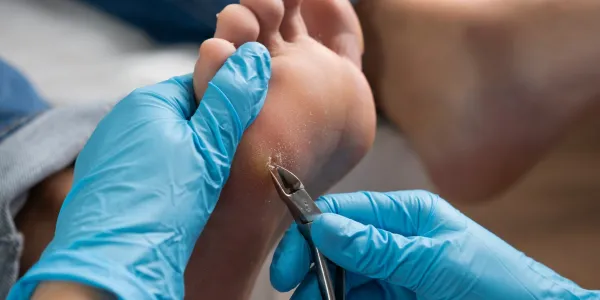
At the Dermatology Department of Prakash Hospital, care starts with a proper diagnosis. The doctor examines the lesion, may gently pare it to look for the typical black dots, and rules out corns, calluses or other skin conditions.
Dr. Mohna Chauhan (MBBS, MD) is a Dermatologist and Cosmetic Surgeon at Prakash Hospital with around 15 years of experience. Her work covers clinical, cosmetic, and paediatric dermatology. She assesses each wart individually and discusses the options, their likely benefits, side effects, and costs before any treatment begins.
Depending on your condition, a treatment plan for Plantar Wart Removal may include paring, cryotherapy, prescription topical agents, electrocautery, radiofrequency ablation or laser. Clinic-based procedures are part of the hospital’s wider range of skin procedures and treatments in Greater Noida.
No treatment can promise that a wart will never return, and results vary between individuals. A clear plan, realistic expectations and follow-up visits give you the best chance of lasting relief.
Aftercare and Prevention: Keeping Your Feet Wart-Free
After any clinic procedure, follow your doctor’s aftercare advice closely. In general:
- Keep the treated area clean and dry, and change dressings as advised
- Expect some soreness or a blister for a few days after cryotherapy; do not pop it
- Wear soft, comfortable footwear while the skin heals
- Watch for signs of infection, such as increasing redness, warmth, pus or fever, and contact the clinic if they appear
- Attend follow-up visits, since stubborn warts often need more than one session
Simple Habits That Lower Your Risk
- Wear flip-flops or pool shoes in public showers, gyms and pool areas
- Keep your feet clean and dry; change socks daily, or more often if your feet sweat
- Don’t share towels, socks, shoes or nail tools
- Cover any existing wart with a waterproof plaster when swimming
- Avoid picking or scratching warts, as this can spread them to other areas
- Moisturise dry, cracked heels so the virus has fewer entry points
- Check children’s feet regularly, as they are the group most often affected
Frequently Asked Questions About Plantar Warts
1. Are plantar warts contagious?
Yes. They spread through direct contact or by touching surfaces where the virus lives, such as wet floors. They are only mildly contagious, and many people exposed to HPV never develop a wart.
2. Can plantar warts go away on their own?
Yes, many do, especially in children. This can take several months to two years. Treatment is mainly for warts that hurt, spread or persist.
3. What is the most effective plantar wart treatment?
No single method suits everyone. Salicylic acid and cryotherapy are common first choices with similar results in studies. Resistant warts may need prescription agents, injections, cautery or laser, chosen by a dermatologist.
4. Is plantar wart removal painful?
Most clinic procedures cause some discomfort. Cryotherapy can sting during and after treatment. Electrocautery and laser are usually done under local anaesthesia, and soreness afterwards is common for a few days.
5. Why does my plantar wart keep coming back?
The virus can remain in nearby skin even after the visible wart is gone. Incomplete treatment, low immunity and re-exposure in shared spaces can all lead to recurrence.
6. Should I worry if my plantar wart turns black?
Small black dots are a normal feature of a wart. A wart may also darken as it dies after treatment. But a spot that is spreading, changing in colour or shape, or bleeding without reason should be checked by a doctor.
7. Can I walk or exercise after treatment?
Usually yes, with some adjustments. You may need cushioned footwear or a pad for a few days. Ask your doctor about swimming and sports, as these depend on the treatment you had.
The Bottom Line
Plantar warts are common, usually harmless, and treatable. Early recognition, patient home care for simple cases, and timely medical advice for painful or stubborn warts make the biggest difference. If a wart is affecting your comfort or confidence, a dermatologist can confirm the diagnosis and help you choose a suitable plantar wart treatment.
To discuss your options, you can book a consultation with Dr. Mohna Chauhan at Prakash Hospital, Greater Noida, or learn more about plantar wart removal.

- Plantar Wart Treatment - November 24, 2026
- Plantar Wart Removal - November 19, 2026
- Black Lips Treatment - November 16, 2026