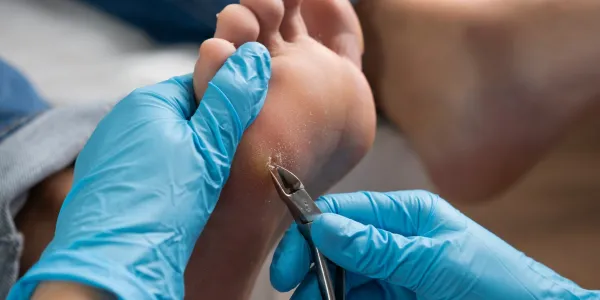
If every step feels like walking on a small stone, a Plantar Wart Removal could be the reason. These stubborn growths on the soles of the feet are among the most common skin problems dermatologists see. They are rarely dangerous, but they can be painful, embarrassing, and frustratingly slow to go away.
Some warts respond to simple home care, while others need a dermatologist’s help. This guide explains what plantar warts are, how to remove warts safely, which products actually work, and when it is time to stop experimenting and book an appointment.
The advice here reflects standard dermatology practice, the kind of guidance patients receive at the Dermatology Department of Prakash Hospital, Greater Noida
Table of Contents
What Exactly Is a Plantar Wart (and Why Did You Get One)?
A plantar wart is a benign skin growth caused by the human papillomavirus (HPV). The virus enters through tiny cuts or cracks in the skin, usually on the heels or the balls of the feet. Because body weight pushes the wart inward, it grows flat and deep instead of raised, which is why it hurts.
HPV thrives in warm, moist places. Common sources of infection include:
- Public showers, locker rooms and swimming pool decks
- Walking barefoot in gyms or shared bathrooms
- Sharing towels, socks or footwear
- Sweaty feet or broken, dry skin on the soles
Children, teenagers and people with weakened immunity are more prone to them. Not everyone exposed to the virus develops a wart, since immune response varies from person to person.
Is It a Wart, a Corn or a Callus?
Many people treat the wrong problem. Look for these signs of a plantar wart:
- Tiny black dots on the surface, which are clotted blood vessels (often called “wart seeds”)
- Interrupted skin lines, because normal fingerprint-like ridges stop at the wart’s edge
- Pain when squeezed from the sides, whereas corns usually hurt with direct pressure
- Clusters of small warts merging into a patch, known as mosaic warts
If you are unsure, a dermatologist can confirm the diagnosis in a quick examination. This matters, because a wart remover applied to a corn or a suspicious lesion will not help and may irritate healthy skin.
How to Remove Warts at Home: What Actually Works
For a single, small wart in a healthy adult, home treatment is a reasonable first step. Patience is essential: most home methods take several weeks, and stopping early is the most common reason they fail.
Salicylic Acid: The Proven First-Line Option
A salicylic acid wart remover is the most widely recommended over-the-counter treatment. It works by gradually dissolving the thickened layers of the wart and may also prompt the immune system to attack the virus. Products come as liquids, gels, plasters and medicated pads, typically in strengths from about 17% to 40%. Thicker sole skin often tolerates the stronger pads better.
Here is how to remove a plantar wart with salicylic acid, step by step:
- Soak the foot in warm water for 10 to 15 minutes to soften the skin.
- Dry the area thoroughly with a towel you will not share.
- File away the dead, white surface gently with a pumice stone or emery board kept only for this purpose.
- Protect the healthy skin around the wart with petroleum jelly or a corn pad.
- Apply the salicylic acid to the wart only, then cover it with a bandage.
- Repeat daily, usually for up to 12 weeks, following the product label.
Stop and seek advice if the skin becomes very red, swollen, or begins to bleed or ooze.
What Is the Best Wart Remover?
There is no single best wart remover for everyone. For most plantar warts, a high-strength salicylic acid plaster is the most practical home choice because it stays in place under the foot. Home freezing kits are also sold, but they do not reach the very low temperatures of medical liquid nitrogen. They tend to work better on small, shallow warts than on deep ones.
Other Home Remedies You May Hear About
- Duct tape occlusion: covering the wart for several days, then soaking and filing. Study results are mixed, but it is low-risk.
- Apple cider vinegar, garlic or tea tree oil: popular online, but evidence is weak and they can burn the skin.
- Cutting or digging out the wart yourself: never do this. It risks infection, scarring and spreading the virus.
If you have searched for “planters wart removal” or “plantars wart removal” and tried these methods for two to three months without progress, it is time for professional care.
Plantar Wart Removal Options Compared at a Glance
Every wart removal method has trade-offs in speed, comfort and cost. The table below summarises the most common options so you can see where each fits. Session counts and timelines are typical ranges and vary with the size, depth and number of warts.
| Treatment | Where it’s done | Typical course | Discomfort | Best suited for |
|---|---|---|---|---|
| Salicylic acid (17–40%) | Home | Daily for up to 12 weeks | Low | Single, small or early warts |
| Duct tape occlusion | Home | 1–2 months | Very low | Mild warts, as an add-on |
| OTC freezing kits | Home | 1–4 applications | Mild | Small, shallow warts |
| Cryotherapy (liquid nitrogen) | Clinic | Every 2–3 weeks, often 2–4 sessions | Moderate | Stubborn or deeper warts |
| Cantharidin application | Clinic | 1–3 sessions | Moderate (blistering) | Warts in patients who prefer no freezing |
| Laser treatment | Clinic | 1–4 sessions | Moderate | Recurrent or resistant warts |
| Electrosurgery and curettage | Clinic | Usually 1 session | Higher; done under local anaesthesia | Large warts that resist other methods |
| Immunotherapy | Clinic | Several sessions over weeks | Low to moderate | Multiple or mosaic warts |
For a deeper look at in-clinic options, explore the skin procedures and wart removal treatments at Prakash Hospital.
Dermatologist Wart Removal: Faster, Safer Results for Stubborn Warts
When home care stalls, dermatologist wart removal offers stronger, more targeted treatment. A specialist can also confirm that the growth really is a wart, which rules out corns, calluses, and, rarely, more serious skin conditions.
What Happens at Your Appointment
A dermatologist will usually examine the wart, ask how long it has been present and what you have tried, and check for conditions such as diabetes that affect healing. They will often pare down the thickened skin first, which helps any treatment penetrate deeper. The plan is then tailored to the wart’s size, location, and your pain tolerance.
Common In-Clinic Treatments
- Cryotherapy: liquid nitrogen freezes the wart, forming a blister that lifts it off over one to two weeks. Repeat sessions are common.
- Stronger topical medicines: prescription-strength acids or combination treatments applied under supervision.
- Cantharidin: a blistering agent painted on the wart and covered, which separates it from healthy skin.
- Laser therapy: targets the blood vessels that feed the wart, useful for warts that keep coming back.
- Minor surgical removal: electrosurgery or curettage under local anaesthesia, reserved for resistant cases because of scarring risk on weight-bearing skin.
- Immunotherapy: stimulates the body’s own defences, helpful for multiple or mosaic warts.
Expert Care at Prakash Hospital, Greater Noida
At Prakash Hospital, skin concerns are managed by the Dermatology Department, where Dr. Mohna Chauhan sees patients. Dr. Chauhan is a Dermatologist and Cosmetic Surgeon with an MBBS from MAMC, an MD from LHMC, and around 15 years of experience. She heads Clairederma, the hospital’s dermatology and cosmetic wing.
For patients who want professional wart removal with minimal scarring, a consultation helps match the right method to the wart rather than relying on trial and error. Ask about which skin procedures suit your case, how many sessions to expect and how to care for the area afterwards.
When to See a Doctor: 7 Warning Signs You Shouldn’t Ignore
Most plantar warts are harmless, but some situations call for a medical opinion rather than another round of over-the-counter treatment. See a dermatologist if:
- You have diabetes, poor circulation or nerve damage in your feet. Self-treatment can cause wounds that heal slowly or become infected, so avoid home acids and freezing kits.
- The wart bleeds, changes colour or grows quickly. Any unusual change needs examination to rule out other skin conditions.
- Pain affects how you walk, work or exercise.
- Warts are spreading or multiplying, including mosaic clusters.
- Home treatment has not helped after two to three months.
- You have a weakened immune system due to illness or medication.
- There are signs of infection, such as redness, warmth, pus or fever.
You should also seek advice if you simply are not sure whether the growth is a wart. Early, correct diagnosis makes plantar wart removal quicker and spares you weeks of treating the wrong problem.
Aftercare and Prevention Tips to Keep Warts From Coming Back
Removing a wart is only half the job. HPV can linger in the surrounding skin, so good habits after treatment lower the chance of recurrence and protect the people you live with.
Caring for Your Feet After Treatment
- Keep any blister from cryotherapy or cantharidin clean and covered. Do not pop it.
- Change socks daily, and more often if your feet sweat.
- Wear comfortable, cushioned shoes or a doughnut-shaped pad to relieve pressure while the skin heals.
- Return for follow-up sessions as advised, since stopping early is a common cause of regrowth.
Everyday Habits That Prevent Plantar Warts
- Wear flip-flops in public showers, pool areas and gym changing rooms.
- Keep your feet clean and completely dry, especially between the toes.
- Moisturise cracked heels, because broken skin lets the virus in.
- Avoid sharing towels, socks, shoes or nail tools.
- Do not pick at or scratch a wart, which can spread it to other areas or to your hands.
- Use a separate file or pumice stone for the wart, and never use it on healthy skin.
Frequently Asked Questions About Plantar Wart Removal
1. How long does plantar wart removal take?
It depends on the method and the wart’s depth. Salicylic acid usually needs several weeks to three months of daily use. In-clinic cryotherapy often takes two to four sessions spaced two to three weeks apart.
2. Do plantar warts go away on their own?
Many do, especially in children, but it can take months or even a couple of years. Treatment is worth considering if the wart is painful, spreading, or affecting daily activities.
3. What is the fastest way to remove a plantar wart?
A dermatologist can usually achieve faster results than home products through cryotherapy, laser or minor surgical removal. The fastest option is not always the most suitable, so it should be chosen after an examination.
4. Is a salicylic acid wart remover safe for everyone?
It is safe for most healthy adults when used as directed. People with diabetes, poor circulation, nerve damage or fragile skin should not use it without medical advice. For young children, check the label and ask a doctor first.
5. Does dermatologist wart removal hurt?
Most procedures cause mild to moderate, short-lived discomfort. Freezing stings briefly, and surgical methods are done under local anaesthesia. Your dermatologist will explain what to expect beforehand.
6. Can plantar warts come back after treatment?
Yes, recurrence is possible because the virus can persist in nearby skin. Completing the full treatment course and following the prevention tips above lowers the risk.
7. I keep searching how to remove the warts on my feet. Where do I start?
Start with a correct diagnosis. If it is a single small wart and you are otherwise healthy, try a salicylic acid product consistently for up to 12 weeks. If it is painful, multiple, or not improving, book a dermatology consultation.
8. Where can I get plantar wart treatment in Greater Noida?
The Dermatology Department at Prakash Hospital, Greater Noida, offers consultations and skin procedures. You can book an appointment with Dr. Mohna Chauhan for an assessment and a personalised treatment plan.
Take the Next Step Toward Pain-Free Feet
Plantar warts are common, treatable and nothing to be embarrassed about. For a small wart, a consistent salicylic acid routine is a sensible start. For warts that hurt, spread or refuse to budge, professional plantar wart removal saves time, discomfort and repeated trial and error.
If you live in or around Greater Noida, book a consultation with Dr. Mohna Chauhan at Prakash Hospital. You will get a clear diagnosis, an honest view of your options and a treatment plan built around your feet and lifestyle.

- Plantar Wart Removal - November 19, 2026
- Black Lips Treatment - November 16, 2026
- Black Lips Reason - November 14, 2026