Squint Surgery: Procedure, Benefits, Recovery & Success Rates
Misaligned eyes — commonly known as a squint or strabismus — affect millions of people worldwide, from young children to adults. While glasses and eye exercises can help in some early-stage cases, many patients ultimately need squint surgery, also called a squint operation or squint eye correction surgery, to achieve lasting correction. At Prakash Hospital, our specialists understand how deeply this condition can impact a person’s confidence, vision, and quality of life. This comprehensive guide walks you through everything you need to know about squint eye surgery — from what happens in the operating room to how long it takes to fully recover.
Table of Contents
What Is a Squint and When Is Surgery Necessary?
A squint (strabismus) occurs when the eyes fail to align properly. One eye may turn inward, outward, upward, or downward while the other remains straight. The condition can be constant or intermittent, and it may affect one or both eyes.
Eye surgery for squint becomes a necessary consideration when:
- Non-surgical treatments like glasses or patching have not corrected the misalignment
- The squint is causing amblyopia (lazy eye) or double vision
- The condition is affecting the child’s or adult’s self-esteem and social interactions
- The angle of deviation is significant enough to impair binocular vision
Early intervention, especially in children, significantly improves outcomes — and that’s exactly why experts like Dr. R.C. Sharma and Dr. Prabha Chouriya Chauhan at Prakash Hospital emphasize timely evaluation.
Squint Eye Treatment Options Before Surgery
Not every squint needs surgery. Depending on the type and cause, squint eye treatment may start with:
- Glasses: Correct refractive errors. Some inward squints in children (accommodative esotropia) are fully corrected with glasses alone.
- Patching or eye drops: Strengthen a lazy eye (amblyopia) before or alongside surgery.
- Prism glasses: Help adults with small squints or double vision.
- Eye exercises (orthoptic therapy): Useful for convergence insufficiency, where the eyes struggle to work together for near work.
- Botox injections: Temporarily weaken an overacting eye muscle in selected cases.
If these don’t correct the alignment, or the squint is large, surgery is usually the best option.
Squint Eye Surgery Procedure: Step by Step
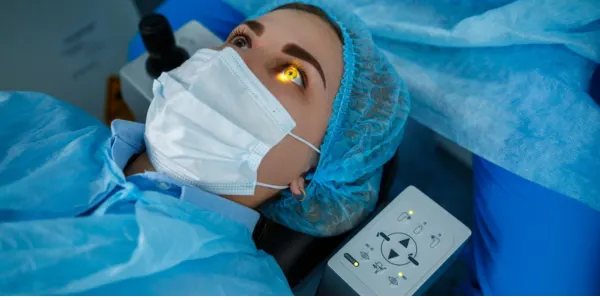
Understanding the surgical process can ease a great deal of pre-operative anxiety. A common myth is that the eye is taken out during a squint eye operation. It is not. The surgeon works only on the muscles on the surface of the eye, and there is usually no visible scar. Here is a step-by-step look at how the procedure is performed:
1. Pre-Surgical Assessment
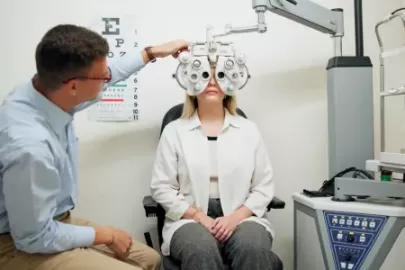
Before any surgical planning begins, the ophthalmologist performs a thorough assessment. This includes measuring the angle of deviation, testing visual acuity, evaluating eye muscle strength, and checking for any underlying conditions like amblyopia. This evaluation determines which muscles need to be adjusted — and by how much.
2. Anaesthesia
In children, general anaesthesia is used so they remain completely still and comfortable. In cooperative adults, local anaesthesia combined with sedation is often sufficient. The choice depends on patient age, anxiety levels, and the complexity of the procedure.
3. Muscle Adjustment
The surgeon makes a small incision in the conjunctiva (the transparent membrane over the white of the eye) to access the eye muscles. Depending on the type of strabismus:
- Recession: The muscle is detached and reattached further back, weakening its pull
- Resection: A portion of the muscle is removed and it is reattached at its original position, strengthening it
- Transposition: Muscles are repositioned to correct paralytic or restrictive squints
The entire procedure typically takes 30–90 minutes, depending on the number of muscles involved.
4. Adjustable Sutures (in select adult cases)
Some adult patients are offered adjustable-suture surgery, where the muscle position is fine-tuned a few hours after surgery or the next day, while the patient is awake. This technique allows a higher degree of precision and is particularly useful for complex or recurrent cases.
Squint Eye Surgery Cost: What to Expect in India
One of the most frequently asked questions is about squint eye surgery cost. The total price varies depending on several factors:
| Cost Factor | Typical Range (India) |
| Single muscle correction | ₹25,000 – ₹40,000 |
| Double muscle correction | ₹40,000 – ₹70,000 |
| Adjustable suture surgery | ₹50,000 – ₹90,000 |
| Anaesthesia & OT charges | Included or ₹5,000–₹15,000 extra |
| Pre-op tests & post-op care | ₹2,000 – ₹8,000 |
Squint correction surgery on both eyes, or on more than two muscles, may cost more. For a precise estimate at Prakash Hospital, contact our team directly.
| Timeline | What to Expect |
|---|---|
| Week 1 | Follow prescribed eye drops. Light activities and screen use resume. Most children return to school in about a week. Avoid swimming and dusty places. |
| Weeks 2–4 | Redness fades. Most adults return to desk work within 1–2 weeks. Swimming usually allowed after 2–4 weeks, as advised by your doctor. |
In many cases, medical insurance covers a portion of the surgery, particularly when it is performed to treat amblyopia or significant visual impairment. It is advisable to check your policy details beforehand.
Key Benefits of Squint Surgery Beyond Cosmetic Improvement
Many people assume eye alignment surgery is purely cosmetic. In reality, the benefits go much deeper:
- Improved Binocular Vision: Properly aligned eyes allow the brain to merge images from both eyes, restoring depth perception and 3D vision
- Reduced Risk of Amblyopia: In children especially, correcting the deviation gives the weaker eye a chance to develop normal vision
- Elimination of Diplopia: Double vision caused by misaligned eyes is often resolved after surgery
- Enhanced Self-Confidence: Aesthetic improvement plays a meaningful role in social and professional interactions
- Better Quality of Life: Activities like driving, reading, and sports become significantly easier
At Prakash Hospital, our approach prioritises functional outcomes alongside cosmetic results, ensuring each patient achieves the best possible vision and eye alignment.
Squint Surgery Recovery Time: A Week-by-Week Guide
A common concern for patients is how long recovery takes after squint eye surgery. While individual timelines can vary, here is what most patients can expect:
| Timeline | What to Expect |
| Day 1–2 | Mild redness, soreness, and watery eyes are normal. Rest at home. Avoid rubbing eyes. |
| Week 1 | Follow prescribed eye drops. Light activities resume. Avoid swimming and dusty environments. |
| Weeks 2–4 | Redness fades. Most adults return to desk work and normal activities. Children resume school. |
| 6–8 Weeks | Eye alignment stabilises. Full visual recovery confirmed at follow-up appointment. |
Some adults notice temporary double vision for a few days to weeks after surgery as the brain adjusts to the new eye position. This usually settles on its own. compared to other eye surgeries. Most patients are pleasantly surprised by how quickly they feel back to normal. Adhering to your surgeon’s post-operative instructions is the most critical factor in a smooth recovery.
Squint Surgery Success Rate: How Effective Is It?
When performed by an experienced strabismus surgeon, squint surgery has a high success rate. Clinical data and real-world outcomes consistently show:
- 60–80% of patients achieve satisfactory alignment after a single procedure
- Children operated on before age 6 have the highest chance of developing normal binocular vision
- Up to 25% of patients may require a second procedure to fine-tune alignment — this is not considered a failure but rather part of the treatment journey
- Adjustable suture techniques in adults have shown higher single-procedure success rates, often above 85%
At Prakash Hospital, the team led by Dr. R.C. Sharma and Dr. Prabha Chouriya Chauhan combines decades of surgical experience with modern diagnostic equipment to maximise precision and minimise the need for repeat interventions.
How Long Do Strabismus Surgery Results Last?
For most patients, the results of strabismus surgery are long-lasting and often permanent. However, the eyes are moved by living muscles and controlled by the brain, so alignment can slowly change over the years in some people. This is more likely if:
- The squint was large or complex
- There is poor vision in one eye
- Glasses or patching are not continued as advised
- There is an underlying condition, such as thyroid eye disease or nerve palsy
Regular follow-up checks help detect any drift early. If needed, a second procedure can safely correct it.
Possible Risks of Squint Surgery
Squint surgery is very safe, but like any surgery it has some risks:y
- Under-correction or over-correction, which may need a second procedure
- Temporary double vision
- Redness or a small bump on the white of the eye for a few weeks
- Infection (rare)
- Very rarely, a slipped muscle or damage to the eye wall
Your surgeon will explain these risks before surgery.
Squint Eye Surgery Success Rate in Adults
The success rate of squint surgery in adults is high: most studies report good alignment in about 70–85% of adults after one procedure. Surgery also relieves double vision in many adults and helps with eye strain and head tilting. Adults who had a squint since childhood may not gain full 3D vision, but alignment and appearance still improve significantly.
Squint Eye Surgery for Adults vs Children: Key Differences
Parents often wonder if it is safe for their child to undergo surgery, while adults may be concerned about whether they have left it too late. The truth is, both age groups benefit significantly — just in different ways.
- Children (under 12): The visual system is still developing, making surgery especially effective for preventing amblyopia and establishing binocular vision. Recovery is fast, and children adapt remarkably well
- Teenagers and Adults: Even though the visual system has matured, surgery can still correct alignment, relieve double vision, and dramatically improve self-confidence. Results are highly satisfying, though achieving binocular fusion may be more limited
There is no ‘too late’ for strabismus correction when the goal is alignment and improved appearance — and for many patients, improved vision follows as well.
Why Choose Prakash Hospital for Your Eye Alignment Surgery?
Choosing the right medical team is the single most important decision in your treatment journey. Here is why patients across the region trust Prakash Hospital:
- Experienced Specialists: Dr. R.C. Sharma brings extensive expertise in ophthalmic surgeries, while Dr. Prabha Chouriya Chauhan offers deep knowledge in paediatric and adult eye care
- Modern Infrastructure: Our operation theatres are equipped with microsurgical tools and diagnostic systems for precise eye muscle surgery
- Personalised Care: Every patient receives an individualised treatment plan based on their specific type of squint, age, and overall health
- Transparent Pricing: We share a clear cost estimate for squint eye surgery during your consultation
- Comprehensive Follow-Up: From the first consultation to the final post-operative check-up, our team remains by your side
Ready to take the first step? Book a consultation at Prakash Hospital today and let our experts guide you.
What to Consider When Choosing a Strabismus Surgeon Near You
When looking for a squint surgeon near you, check:
- Specialisation: Is the surgeon experienced in squint (strabismus) and paediatric eye surgery?
- Experience: How many squint surgeries do they perform each year, in both children and adults?
- Detailed testing: Do they do a full orthoptic assessment (angle measurement, binocular vision, and lazy eye check) before surgery?
- Techniques: Do they offer adjustable sutures for suitable adults?
- Anaesthesia support: Is safe paediatric anaesthesia available for children?
- Clear expectations: Do they explain the realistic success rate and the chance of needing a second surgery?
- Follow-up: Is regular follow-up included after surgery?
Frequently Asked Questions
Q1. Is squint surgery painful?
No — the procedure is performed under anaesthesia, so there is no pain during surgery. Mild discomfort, a gritty sensation, and redness are common for a few days after the operation, but these are easily managed with prescribed eye drops and pain relief.
Q2. What is the squint eye surgery recovery time?
Most patients feel comfortable returning to routine activities within 1–2 weeks. Squint surgery recovery time for full visual stabilisation, however, takes approximately 6–8 weeks. Children tend to recover even faster than adults.
Q3. What is the average squint eye surgery cost in India?
Costs typically range from ₹25,000 to ₹90,000 depending on the number of muscles involved, the technique used, and the facility. At Prakash Hospital, we provide detailed cost breakdowns during the consultation so there are no surprises.
Q4. Is squint eye surgery safe and effective for adults?
Absolutely. Adults can and do benefit greatly from strabismus correction surgery. While the goal of restoring full binocular vision is more achievable in younger patients, adults gain significant cosmetic and functional improvements, including relief from double vision and enhanced confidence.
Q5. What happens if squint surgery is not done?
Untreated squint can lead to progressive amblyopia (permanent vision loss in the weaker eye), loss of depth perception, and persistent double vision. In children, early intervention is critical to prevent irreversible visual impairment.
Q6. How many times can squint surgery be repeated?
If the initial procedure does not achieve full alignment, a second — or occasionally a third — surgery can be performed safely. Re-operations are not uncommon, and an experienced surgeon will plan accordingly to optimise outcomes over time.
Q7. What is the success rate of squint surgery in adults?
Most adults achieve good eye alignment after one surgery, with studies reporting about 70–85% success. Some may need a second procedure for fine-tuning.
Q8. How long do squint surgery results last?
For most people, the results are long-lasting. In some patients, the eyes may slowly drift over years, especially with large or complex squints. Regular follow-up helps catch this early.
Q9. Can squint be treated without surgery?
Some squints can be treated with glasses, patching, prism glasses, eye exercises, or Botox injections. Larger or persistent squints usually need surgery.
Q10. How long does a squint operation take?
A squint eye operation usually takes 30–90 minutes, depending on how many muscles need correction. Most patients go home the same day.
Q11. When can I return to work after squint surgery?
Most adults return to desk work within 1–2 weeks. Avoid swimming, dusty places, and rubbing the eyes until your doctor allows it.
Squint correction surgery is a safe, effective, and life-changing procedure for both children and adults.With the right specialist, the right timing, and the right care, the outcome can be truly transformative — not just for your eyes, but for your confidence and overall wellbeing.
To discuss your case with our expert team, contact Prakash Hospital today. Let Dr. R.C. Sharma and Dr. Prabha Chouriya Chauhan help you see the world through properly aligned eyes.

- Baby Eczema - September 30, 2026
- How to Get Fair Skin - September 28, 2026
- Best Hand Creams for Dry Skin - September 24, 2026