Myopia Symptoms: Early Warning Signs, Causes, Diagnosis & Treatment
Have you ever squinted to read a distant board, struggled to recognize a face across the room, or found yourself sitting closer to the television than everyone else? These could be myopia symptoms — signs that your eyes are no longer focusing correctly on objects in the distance. Myopia, commonly known as nearsightedness or short-sightedness, is one of the most prevalent refractive errors affecting millions of people across India and worldwide.
Early identification of myopia signs and symptoms is critical to preventing long-term complications, especially in children whose vision is still developing. At Prakash Hospital, Greater Noida, our ophthalmology team — led by Dr. R.C. Sharma — provides comprehensive eye examinations, accurate diagnosis, and personalised treatment plans to help patients of all ages maintain clear, healthy vision.
Table of Contents
What Is Myopia? Understanding the Basics
Myopia occurs when the eyeball is slightly longer than normal, or when the cornea has too much curvature. This causes light entering the eye to focus in front of the retina rather than directly on it, resulting in blurred distance vision. Near objects, however, remain clear — hence the term “nearsightedness.”
The condition typically begins in childhood and may worsen progressively through the teenage years before stabilising in early adulthood. In some individuals, it continues to progress into high myopia, which carries a greater risk of serious complications such as retinal detachment, glaucoma, and macular degeneration.
Early Warning Signs: Recognising Myopia Symptoms Before They Worsen
One of the biggest challenges with myopia is that it often develops gradually. Many people — especially children — adapt without realising their vision has changed. Knowing the early myopia eye symptoms can help you seek timely care.
Common Myopia Symptoms in Children
- Sitting unusually close to the television, whiteboard, or screen
- Squinting or partially closing eyes to see distant objects
- Frequent eye rubbing, especially after focusing on distant tasks
- Complaints of headaches after school or outdoor activities
- Difficulty copying from the classroom board
- Reduced performance in outdoor sports due to poor distance vision
- Holding books or devices very close to the face
Myopia Symptoms in Teenagers and Adults
- Blurred vision when driving, especially at night
- Difficulty reading road signs, cinema screens, or presentation slides
- Eye fatigue and strain during prolonged visual tasks
- Increased sensitivity to glare or halos around lights
- Need to squint frequently in outdoor environments
If you or your child experience any of these myopia signs and symptoms, an eye examination at Prakash Hospital is strongly recommended. Our ophthalmology department uses advanced diagnostic equipment to detect and grade myopia accurately.
What Are High Myopia Symptoms? When Nearsightedness Becomes Serious
High myopia is defined as a refractive error greater than –6.00 dioptres. High myopia symptoms go beyond simple blurriness and may signal structural changes within the eye that require urgent medical attention.
- Severely blurred distance vision even with glasses or contact lenses
- Floaters — small specks or threads drifting across the visual field
- Flashes of light, particularly in dim environments
- A shadow or curtain-like obstruction in part of the visual field
- Progressive decline in central or peripheral vision
- Increased risk of retinal tears, retinal detachment, or macular degeneration
These high myopia symptoms require immediate evaluation. A sudden increase in floaters or the appearance of flashes could indicate a retinal emergency. Our Best Emergency Hospital in Greater Noida — Prakash Hospital — is equipped with round-the-clock emergency eye care services to address such critical situations promptly.
What Causes Myopia? Key Risk Factors and Contributing Triggers
Understanding what causes myopia helps in both prevention and management. While genetics play a significant role, environmental and lifestyle factors have become increasingly important in recent decades.
- Genetic predisposition: Children with one or both myopic parents have a significantly higher risk
- Excessive near work: Prolonged reading, screen time, and close-up tasks accelerate progression
- Insufficient outdoor time: Lack of exposure to natural light is strongly linked to myopia development in children
- Urban lifestyle: Indoor-centric routines contribute to rising prevalence among city-dwelling children
- Early onset: Children who develop myopia before age 10 are more likely to progress to high myopia
- Ethnicity: Higher prevalence is observed among individuals of East and South Asian descent
How Is Myopia Diagnosed? Understanding the Eye Examination Process
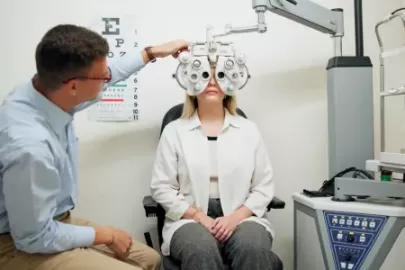
Accurate diagnosis of myopia involves a structured eye examination. At Prakash Hospital, Dr. R.C. Sharma and the ophthalmology team follow a systematic approach to ensure every patient receives a precise assessment.
- Visual Acuity Test: Measures how clearly you can see at various distances using a standardised Snellen chart
- Refraction Test: Determines the exact lens prescription needed to correct vision
- Retinoscopy: Objectively measures how light reflects from the retina to estimate refractive error
- Autorefraction: Automated measurement of the eye’s refractive error for greater accuracy
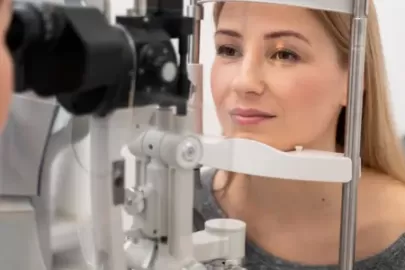
- Slit-Lamp Examination: Detailed inspection of the front of the eye including cornea, lens, and iris
- Fundus Examination: Evaluation of the retina and optic nerve, especially important in high myopia cases
- Axial Length Measurement: Measures the physical length of the eyeball, crucial for monitoring myopia progression
Regular eye check-ups are advised every year for children in school and every two years for adults with stable vision. Individuals with high myopia symptoms may need more frequent monitoring.
Myopia Treatment Options: From Glasses to Surgery
There is no one-size-fits-all approach to myopia treatment. The choice of intervention depends on age, severity, lifestyle, and the patient’s overall eye health. Below is a comparative overview of the most effective options currently available.
| Treatment Option | Suitable For | Effectiveness | Approx. Cost (India) |
| Prescription Glasses | All age groups | High – immediate correction | ₹500 – ₹5,000 |
| Contact Lenses | Teenagers & adults | High – daily correction | ₹800 – ₹8,000/month |
| Orthokeratology (Ortho-K) | Children & young adults | Moderate – slows progression | ₹15,000 – ₹40,000 |
| Atropine Eye Drops | Children (myopia control) | Moderate – reduces progression | ₹200 – ₹1,000/month |
| LASIK Surgery | Adults 18+ (stable refraction) | Very High – long-term correction | ₹30,000 – ₹1,20,000 |
| ICL (Implantable Lens) | High myopia cases | Very High – permanent fix | ₹80,000 – ₹1,50,000 |
*Costs are indicative and may vary based on technology used and individual clinical needs. Please contact Prakash Hospital for a personalized consultation and accurate cost estimate.
Prescription Glasses and Contact Lenses
For most patients, myopia treatment begins with corrective eyewear. Prescription glasses remain the safest, most accessible, and most affordable first-line solution. Contact lenses offer greater freedom and are suitable for motivated teenagers and adults who can follow proper hygiene practices.
Orthokeratology (Ortho-K Lenses)
These specially designed rigid contact lenses are worn overnight to gently reshape the cornea. The effect temporarily improves vision throughout the day without lenses or glasses. Ortho-K is considered one of the best treatments for myopia progression control in children aged 8 to 15.
Atropine Eye Drops
Low-dose atropine drops (0.01% to 0.05%) are used to slow the elongation of the eyeball in children, thereby controlling myopia progression. This is a clinically proven, non-invasive approach that forms part of modern high myopia treatment protocols.
LASIK and Refractive Surgery
For adults with stable myopia, LASIK (Laser-Assisted In Situ Keratomileusis) reshapes the cornea to permanently reduce or eliminate the refractive error. It is widely regarded as the best treatment for myopia in adults seeking freedom from corrective eyewear. Our ophthalmology team evaluates every candidate carefully before recommending surgery.
In cases of very high myopia where LASIK is not suitable, Implantable Collamer Lenses (ICL) offer an excellent permanent solution by placing a corrective lens inside the eye without removing corneal tissue.
Associated Eye Conditions: Squint and Other Complications
Children with untreated myopia may develop associated conditions such as strabismus (squint), amblyopia (lazy eye), or binocular vision problems. At Prakash Hospital, our specialists offer advanced squint surgery as part of a comprehensive eye care programme. Early detection and intervention significantly improve outcomes for these conditions.
Myopia Treatment Cost in India: What to Expect
Understanding myopia treatment cost is an important part of planning your eye care journey. Costs in India vary considerably based on the type of treatment, technology used, and the healthcare facility.
- Basic prescription glasses: ₹500 – ₹5,000 (frames and lenses)
- Standard contact lenses: ₹800 – ₹3,000 per month
- Ortho-K lenses: ₹15,000 – ₹40,000 (initial fitting and lenses)
- Atropine drops: ₹200 – ₹1,000 per month
- LASIK surgery: ₹30,000 – ₹1,20,000 per eye depending on technique
- ICL surgery: ₹80,000 – ₹1,50,000 per eye
At Prakash Hospital, we are committed to offering transparent pricing and accessible, high-quality eye care. Contact us to schedule a consultation and receive a detailed cost estimate based on your individual needs.
Can Myopia Be Prevented? Lifestyle Tips to Protect Your Vision
While genetic myopia cannot be entirely prevented, research confirms that certain lifestyle modifications can significantly delay onset and slow progression — particularly in children.
- Increase outdoor time: At least 90 minutes of outdoor activity daily is associated with reduced myopia risk
- Follow the 20-20-20 rule: Every 20 minutes of near work, look at something 20 feet away for 20 seconds
- Maintain proper reading distance: Hold books and devices at least 30–40 cm from the face
- Ensure good lighting: Avoid reading in dim light or direct glare
- Limit screen time: Especially in children under 12; use blue-light filters where appropriate
- Schedule regular eye examinations: Annual check-ups allow for early detection and timely management
Why Choose Prakash Hospital for Myopia Management in Greater Noida?
Prakash Hospital is a trusted name in comprehensive healthcare in Greater Noida. Our ophthalmology department combines experienced specialists, modern diagnostic technology, and compassionate patient care to deliver outstanding visual health outcomes.
- Dr. R.C. Sharma — a seasoned ophthalmologist with expertise in refractive errors, retinal conditions, and surgical interventions
- State-of-the-art diagnostic equipment for precise assessment of myopia eye symptoms
- Personalised treatment plans tailored to age, severity, and lifestyle
- Paediatric eye care services with child-friendly examination protocols
- A dedicated Emergency Hospital in Greater Noida for urgent ophthalmic conditions
- Transparent myopia treatment cost information with no hidden charges
We welcome patients from Greater Noida, Noida, Delhi NCR, and surrounding regions. You can also read our patient reviews on Google to learn more about the care experience at Prakash Hospital.
Frequently Asked Questions (FAQs)
Q1. What are the first signs of myopia I should watch for?
The earliest myopia symptoms include squinting to see distant objects, sitting very close to screens, frequent headaches, and blurred vision in the distance while near vision remains clear. In children, declining academic performance due to difficulty seeing the board is a common early indicator.
Q2. At what age does myopia typically begin?
Myopia most commonly develops between the ages of 6 and 14 and tends to progress through adolescence. However, it can begin as early as age 5 or as late as early adulthood. Adult-onset myopia is also possible and is increasingly linked to prolonged near work and digital device use.
Q3. What distinguishes high myopia symptoms from regular myopia?
Regular myopia causes blurred distance vision correctable with glasses. High myopia symptoms are more severe and may include floaters, flashes of light, shadowing in the visual field, and an elevated risk of sight-threatening complications such as retinal detachment or macular degeneration. Immediate medical evaluation is essential.
Q4. What is the best treatment for myopia in children?
The best treatment for myopia in children typically involves a combination of corrective glasses, increased outdoor time, and myopia control strategies such as low-dose atropine drops or orthokeratology lenses. The choice depends on the child’s age, degree of myopia, and progression rate. Dr. R.C. Sharma at Prakash Hospital provides individualised guidance for every paediatric patient.
Q5. Is LASIK safe, and who is it suitable for?
LASIK is a safe, well-established surgical option for adults aged 18 and above whose myopia has been stable for at least one to two years. It is not suitable for individuals with very thin corneas, severe dry eyes, or certain other ocular conditions. A thorough pre-surgical assessment at Prakash Hospital ensures that only eligible candidates proceed.
Q6. How much does myopia treatment cost at Prakash Hospital?
Myopia treatment cost varies by type: glasses and contact lenses are the most affordable, while surgical options such as LASIK or ICL represent a higher investment with lasting benefits. Prakash Hospital offers competitive pricing with transparent cost breakdowns. Contact us for a personalized cost consultation.
Q7. Can myopia be cured permanently?
Refractive surgeries such as LASIK and ICL can permanently eliminate or significantly reduce myopia in eligible adults, providing long-term freedom from glasses. However, these procedures do not prevent age-related eye conditions. In children, the focus is on controlling progression rather than permanent cure, as the eye is still developing.
Conclusion: Don’t Ignore the Signs — Your Vision Deserves Expert Care
Myopia is not merely an inconvenience — it is a progressive condition that, if left unmanaged, can significantly impact quality of life and long-term eye health. Recognising myopia symptoms early, understanding the causes, and seeking professional diagnosis are the first and most critical steps toward effective management.
Whether you are concerned about myopia eye symptoms in your child, exploring high myopia treatment for yourself, or simply want to understand your options, the expert team at Prakash Hospital, Greater Noida is here to help. Led by Dr. R.C. Sharma, our ophthalmology department combines clinical expertise with genuine patient care — because clear vision is one of life’s most valuable gifts.
Book your appointment today at Prakash Hospital and take the first step towards protecting your eyesight for life.
- Baby Eczema - September 30, 2026
- How to Get Fair Skin - September 28, 2026
- Best Hand Creams for Dry Skin - September 24, 2026