Hip replacement surgery has helped many people ease their chronic pain and move around better. But before going ahead with the procedure, you and your surgeon need to decide between a Cemented vs Cementless Hip Replacement. This decision plays a big role in how fast you recover how well the surgery works over time, and the success of the treatment.
Table of Contents
To understand these options, it’s important to find the right guidance. At Prakash Hospital in Greater Noida, we focus on both approaches in our orthopedic department. Our team creates treatment plans that fit each patient’s specific requirements.
What Is Cemented and Uncemented Hip Replacement?
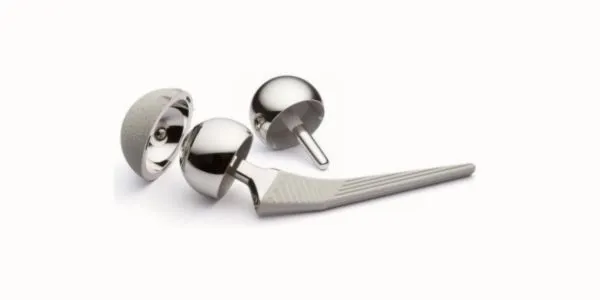
In a total hip replacement, the damaged ball (femoral head) and socket (acetabulum) are replaced with an artificial joint. The main difference is how the implant is fixed to your bone:
- Cemented hip replacement: Bone cement holds the implant in place right away.
- Uncemented (cementless) hip replacement: The implant has a rough, porous surface, and your own bone grows into it over time.
- Hybrid hip replacement: A combination of both, usually a cemented stem in the thigh bone and a cementless cup in the socket. This is a common choice for patients in their late 60s and 70s.
What Is a Primary Uncemented Total Hip Replacement?
“Primary” simply means it is the first hip replacement on that joint, not a repeat (revision) surgery. So a primary uncemented total hip replacement is a first-time hip replacement using cementless implants. It is common in younger, active patients with strong bones.
The choice of implant doesn’t depend on which side is operated. A right or left hip replacement follows the same decision process.
Cemented Hip Replacement (Hip Replacement With Cement): The Traditional Approach
A cemented total hip replacement secures the artificial joint to the bone using a medical bone cement called polymethylmethacrylate (PMMA). The cement in hip replacement acts like a grout, not a glue — it fills the space between bone and implant and hardens within minutes.
The cement fills any gaps between the bone and the implant and forms a strong connection right away. It doesn’t rely on natural bone to grow over time. To help older adults with conditions like osteoporosis, this type of replacement often gives more stable results and lowers certain risks.
National joint registry data show that well-performed cemented hip replacements last beyond 10–15 years in most patients, especially older adults
Cementless (Uncemented) Hip Replacement: The Modern Alternative
A Cemented vs Cementless Hip Replacement relies on your bone growing into the rough surface of the implant. The implant comes with a porous layer that helps your bone attach itself forming a strong connection.
The implant is press-fitted tightly into the bone, so most patients can put weight on the leg soon after surgery. The permanent bond forms over about 6–12 weeks as bone grows into the implant. Cementless hip implants also show excellent long-term results in patients with good bone quality.
Doctors often consider younger people with strong bones as great candidates for cementless hip replacements. This is because their bones tend to integrate well over time lowering the chance of the implant coming loose.
Patient Selection Factors: Who Benefits From Each Approach?
Age Considerations
The decision between cemented and uncemented hip replacements depends on individual patient needs, with age playing a major role:
- Under 65 Years: Younger individuals often have stronger bones and heal faster. This makes cementless implants a great option. Their active way of living pairs well with the durable fixation that these implants can provide over time.
- Over 70 Years: Older adults tend to see better results with cemented implants. These offer immediate stability, so they can start walking sooner, which helps lower risks tied to being immobile for too long.
Bone Quality Assessment
Surgeons focus on bone strength while deciding between these two types of hip replacements, though they may also consider other factors.
- Strong and Dense Bone: Works well with cementless implants because good bone structure helps with bone growth into the implant.
- Weaker Bones or Osteoporosis: Cemented fixation fits better here since it gives quick stability no matter the bone’s condition.
Health, Activity Level & the Best Hip Replacement for an Active Person
Total hip replacement swaps out both the ball and socket in the hip joint. The type of fixation depends on how you live your life:
- Active People: Cementless implants are usually the best hip replacement for an active person with good bone, because the bone bonds directly to the implant. Durable bearing surfaces (like ceramic or highly cross-linked polyethylene) also help the joint last longer.
- People with Limited Movement: Cemented implants let you put weight on the joint right away.
Common Risks Before Hip Replacement
There are some common risks before hip replacement surgery that patients need to understand before undergoing the procedure.
- Medical Problems: Having conditions like heart disease, obesity, or uncontrolled diabetes can raise risks during surgery.
- Drug Adjustments: You might need to stop using blood thinners or certain supplements before surgery.
- Infection Concerns: Any ongoing infection in the body needs to be treated prior to surgery.
- Weak Bones: If someone has advanced osteoporosis, it can make the procedure harder and affect how the joint is secured.
- Expectations Matter: It’s important to know what results and recovery times to expect .
To reduce these risks, residents of Noida and Greater Noida have access to complete hip pain care that includes detailed pre-surgery checkups.
Debunking Hip Replacement Myths
Myth 1: Hip Replacements Stop Working After 10 Years
Reality: Modern hip replacement methods now last far longer than before. Many implants function well for over 20 years, depending on the type used and how active the person is. This directly challenges some myths about hip replacement surgery, such as the belief that implants wear out quickly.
Myth 2: Hip Replacement Is Only for Elderly Patients
Reality: People of different ages can benefit from hip replacements. Surgeons focus on things like the amount of pain and how much it affects daily life instead of just looking at a person’s age.
Myth 3: Recovery Requires Months of Bed Rest
Reality: Most patients start walking with help on the day of their surgery. Recovery times vary based on the way the implant is secured, but people often return to easier activities within weeks rather than waiting months.
Myth 4: Every Hip Replacement Works the Same Way
Truth: Doctors use different methods, materials, and techniques for hip replacements. These are chosen based on what fits the specific needs of each patient best.
Hip Surgery Without Replacement: Are There Alternatives?
Not every hip problem needs a replacement. Depending on your age and condition, your doctor may first suggest:
- Non-surgical care: Physiotherapy, weight loss, pain medicines, walking aids, and sometimes joint injections for early arthritis
- Hip arthroscopy: Keyhole surgery for labral tears or hip impingement in younger patients without advanced arthritis
- Core decompression: For early avascular necrosis (AVN), to relieve pressure and improve blood flow to the bone
- Osteotomy: Reshaping the bone to improve joint alignment in young adults with hip dysplasia
- Hip resurfacing: Capping the ball instead of removing it, suitable for selected young, active patients with good bone
- Fracture fixation: Some hip fractures can be fixed with screws or plates instead of a replacement
When arthritis is advanced and pain limits daily life, a total hip replacement usually gives the most reliable result.
Leading Hip Replacement Care
If you need hip replacement surgery in Greater Noida, Prakash Hospital offers top-notch care from skilled orthopedic surgeons. A trusted hospital for hip joint pain in Greater Noida, the hospital provides:
- Modern techniques like minimally invasive surgery
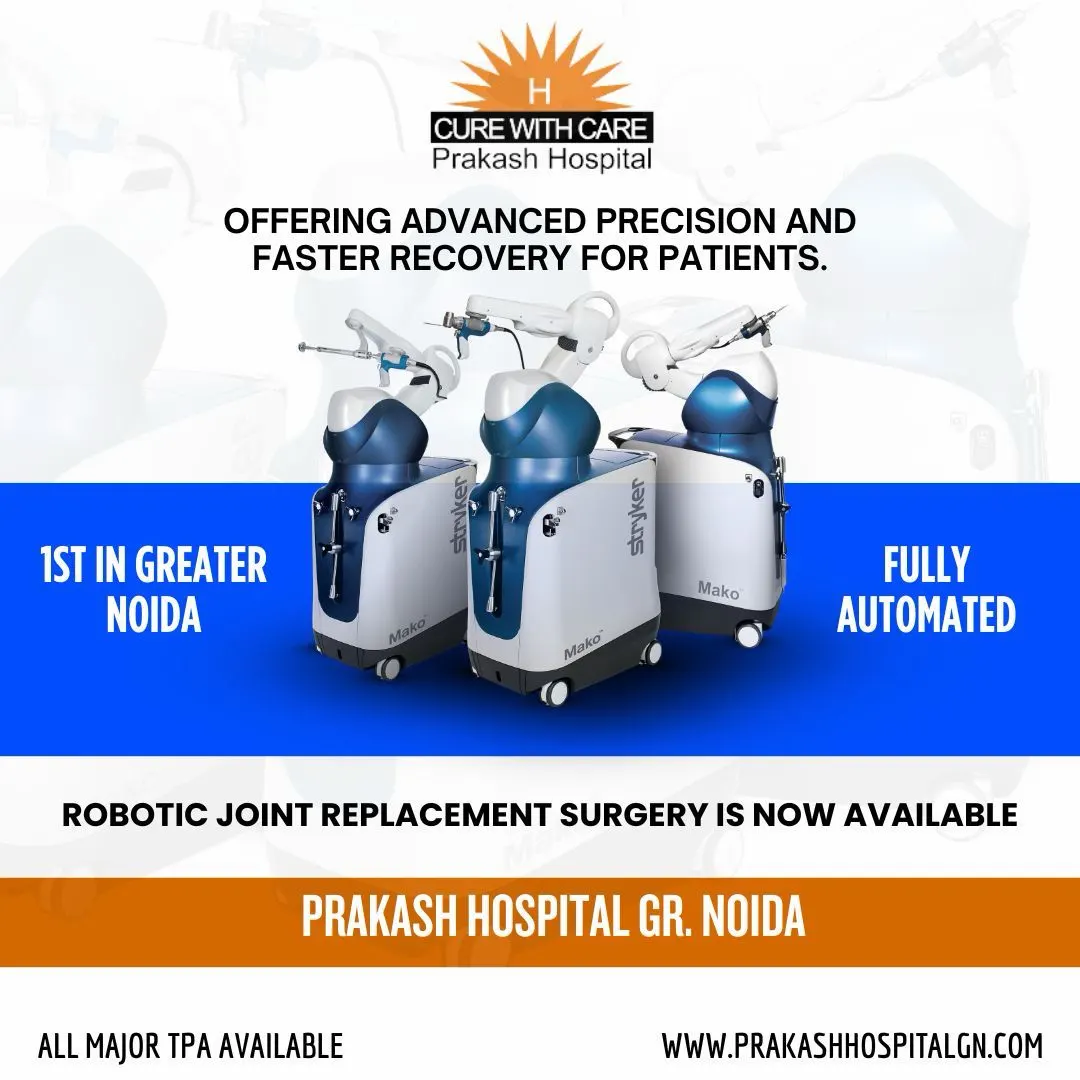
- Tools like computer assistance to place implants
- Implants chosen to suit each patient’s bone quality and needs
- Plans to recover and regain movement
- High-tech equipment and cutting-edge medical setups
The experienced orthopedic doctor in Greater Noida will decide if a cemented or cementless hip replacement suits you, depending on your condition. Dr. V S Chauhan has more than ten years of focused experience with joint replacements aiming to provide the best results to his patients.
Cement vs Non Cement Hip Replacement: Side-by-Side Comparison
| Factor | Cemented Hip Replacement | Cementless Hip Replacement |
|---|---|---|
| Initial Stability | Immediate | Strong press-fit at surgery; full bone bond over 6–12 weeks |
| Weight-bearing | Usually full weight-bearing from day 1 | Usually weight-bearing as comfortable from day 1; sometimes limited at first if the surgeon advises |
| Hybrid Option | Cemented stem + cementless cup — combines immediate stem stability with bone-bonded socket (see below) |
|---|
Cementless Hip Replacement Recovery Time vs Cemented
Recovery is quite similar for both types. The main difference is how the implant bonds with the bone.
| Stage | Cemented Hip | Cementless Hip |
|---|---|---|
| Day 1 | Walking with a walker | Walking with a walker (weight as advised) |
| Weeks 2–4 | Walker to cane | Walker to cane |
| Weeks 6–12 | Most daily activities, walking without support | Bone bonding completes; most daily activities |
| 3–6 months | Full recovery | Full recovery |
With a left hip replacement, patients who drive an automatic car may be allowed to drive a little sooner, once off strong painkillers and with surgeon approval.
Patient Experience: A Case Study
Raj Pal’s Journey to Renewed Mobility
Raj Pal, a retired teacher of 69 years from Noida, dealt with unbearable hip pain for many years. He could no longer do basic things like stroll to the local market or spend time playing with his grandkids.
Doctors at Prakash Hospital diagnosed him with severe osteoarthritis after examining him. They suggested a cemented hip replacement due to his age and the condition of his bones.
“I started walking with help the next day after surgery,” Raj Pal shares. “Knowing that the cemented implant gave me stability made me feel hopeful as I recovered.”
After three months, Raj Pal was able to resume most of his usual tasks following surgery. Fast forward two years, he now takes morning walks in the park and joins in on family gatherings with ease.
“The advice I got helped me decide on the procedure that was perfect for my situation. My life feels so much better now,” he says.
Frequently Asked Questions
How can I figure out which hip replacement method suits me best?
A: An experienced orthopedic surgeon considers your age, bone strength, activity habits, and overall health to suggest the best option for you.
How does recovery time differ between cemented and cementless hip replacements?
A: With both cemented and cementless hip replacement, most patients start walking with a walker within a day of surgery. Cemented implants are stable immediately. With cementless implants, bone grows into the implant over 6–12 weeks, and a few patients are asked to limit weight at first. Most return to daily activities in 6–12 weeks.
Is there an age limit for these procedures?
A: There is no strict age limit, but doctors tend to choose cemented implants for people over 70. Cementless options are more common for individuals under 65.
Which procedure works better in the long run?
A: Both cemented and cementless implants hold up well. Registry data show cemented and hybrid hips often do slightly better in older patients, while cementless hips perform very well in younger patients with good bone. The right match matters more than the method itself.
How long does a hip replacement hold up?
A: Many hip replacements today can keep working for over 20 years. Things like a person’s weight, how active they are, the implant type, and how the surgery is done all play a part in how long it lasts.
Cemented or uncemented hip replacement — which one is best?
Neither is best for everyone. Cemented hips suit older patients or those with weak bones, while cementless hips suit younger, active patients with strong bones. Many patients receive a hybrid of both.
Is the cement in hip replacement safe?
Yes. Bone cement has been used safely for decades. In rare cases, frail elderly patients can have a drop in blood pressure when the cement is placed, so surgeons take special precautions during this step.
What is the best hip replacement for an active person?
For active adults with good bone quality, a cementless hip with durable bearing surfaces is usually preferred. Your surgeon will also consider your weight, sports, and activity goals.
What is the recovery time for cementless hip replacement?
Most patients walk the day after surgery, move from a walker to a cane in 2–4 weeks, return to daily activities in 6–12 weeks, and fully recover in 3–6 months.
Is hip surgery without replacement possible?
Yes, in some cases. Options include physiotherapy, hip arthroscopy, core decompression, osteotomy, or hip resurfacing. These work best in earlier stages of disease and in younger patients.
Is a left hip replacement different from a right hip replacement?
No. The surgery and implant choice are the same. The only practical difference is that you may be able to drive an automatic car sooner after a left hip replacement.
Conclusion
Deciding between Cemented vs Cementless Hip Replacement is an important choice, and neither is “best” for everyone. Patients should discuss this with an orthopedic doctor who understands their specific situation. Both options work well when tailored to what each patient needs.
Knowing the difference between cemented and uncemented hip replacement helps you decide the right treatment. Prakash Hospital in Greater Noida offers care plans Customized based on your specific condition after thorough evaluation.
If hip pain is affecting how you go about your day, set up a consultation to explore possible treatments. With the right care, you can move better and feel less pain, no matter which type of hip replacement suits you best.
To book an appointment or learn more about hip replacement options, reach out to the orthopedic team at Prakash Hospital today.

- How to Remove Pigmentation From Face Permanently - October 19, 2026
- Back Acne - October 16, 2026
- Skin Allergy Symptoms: Early Warning Signs You Should Never Ignore - October 13, 2026