
Hypermetropia: Symptoms, Causes, Treatment, and Prevention Guide
Struggling to read a book up close but seeing the road sign far away just fine? You might be dealing with a refractive error called hypermetropia. It’s one of the most common vision problems worldwide, yet many people live with it for years without realising something is off — they simply assume their eyes get “tired” easily or that headaches are just part of daily life.
At Prakash Hospital, our ophthalmology team frequently meets patients who are surprised to learn that their constant eye strain, blurred near vision, or recurring headaches are actually signs of an underlying refractive condition. This guide breaks down everything you need to know about hypermetropia in plain, easy-to-understand language — what it is, why it happens, how it’s diagnosed, and what can be done about it.
What Is Hypermetropia? Understanding the Basics
So, what is hypermetropia exactly? In simple terms, hypermetropia — also called farsightedness or long-sightedness — is a refractive error in which the eye is unable to focus properly on nearby objects. Light entering the eye focuses behind the retina instead of directly on it, which makes close-up images appear blurry while distant objects often remain relatively clear.
This happens because of the eye’s shape or structure. In a normal eye, the cornea and lens bend (refract) light precisely onto the retina, the light-sensitive layer at the back of the eye. With hypermetropia, the eyeball may be shorter than average, or the cornea may be too flat, causing light rays to converge at a point beyond the retina rather than on it.
It’s worth noting that hypermetropia is different from presbyopia, the age-related decline in near vision that affects almost everyone after the age of 40. While the symptoms can feel similar, the underlying causes are not the same, and an eye specialist can easily tell them apart through a comprehensive eye examination.
Common Symptoms of Hypermetropia You Shouldn’t Ignore
Hypermetropia doesn’t always announce itself loudly. Many people, especially children, don’t realise they have it because their brain compensates for the blur over time. Still, certain warning signs tend to show up:
- Blurred vision when looking at nearby objects, such as text, phone screens, or handwork
- Frequent headaches, particularly after reading, writing, or screen time
- Eye strain or a feeling of tired, “heavy” eyes by the end of the day
- Squinting to bring close objects into focus
- Difficulty concentrating on near tasks, which is sometimes mistaken for poor attention span in children
- Rubbing the eyes frequently, especially in young kids
- In more severe or uncorrected cases, eye discomfort or a mild ache around the brows
If you or your child experience these symptoms regularly, it’s a good idea to schedule a comprehensive eye check-up rather than waiting for things to get worse.
Causes of Hypermetropia: Why Does It Happen?
Understanding the causes of hypermetropia helps in recognising risk factors early and seeking timely care. The condition usually develops due to one or more of the following reasons:
1. Shorter Eyeball Length
The most common cause is an eyeball that is shorter, front to back, than a typical eye. This anatomical difference means light focuses behind the retina rather than directly on it.
2. Flatter Cornea
A cornea that is flatter than normal doesn’t bend light strongly enough, again resulting in the focal point landing behind the retina instead of on it.
3. Genetics and Family History
Hypermetropia often runs in families. If one or both parents have a significant refractive error, children have a higher chance of developing similar vision issues.
4. Age-Related Changes
Infants are commonly born with a mild degree of hypermetropia, which usually reduces as the eye grows and lengthens during childhood. However, some children retain a higher degree that requires correction.
5. Underlying Medical or Eye Conditions
In rarer cases, conditions such as certain retinal disorders, eye tumours, or systemic diseases (like diabetes affecting eye structure) can contribute to farsightedness.
6. Eye Trauma or Previous Eye Surgery
Injuries to the eye or complications following certain surgical procedures can occasionally alter the eye’s natural shape, leading to hypermetropia.
Causes of Myopia and Hypermetropia: What’s the Connection?
People often search for the causes of myopia and hypermetropia together because both are refractive errors, but they sit at opposite ends of the spectrum. Myopia (nearsightedness) occurs when the eyeball is too long or the cornea too curved, causing light to focus in front of the retina — making distant objects blurry while near vision stays sharp. Hypermetropia is essentially the reverse: a shorter eyeball or flatter cornea causes light to focus behind the retina.
Both conditions share overlapping risk factors, including genetics, eye growth patterns, and in the case of myopia, excessive near-work or limited outdoor time during childhood. You can read more about how these two conditions differ in symptoms on our detailed page about causes of myopia and hypermetropia.
How Is Hypermetropia Diagnosed?
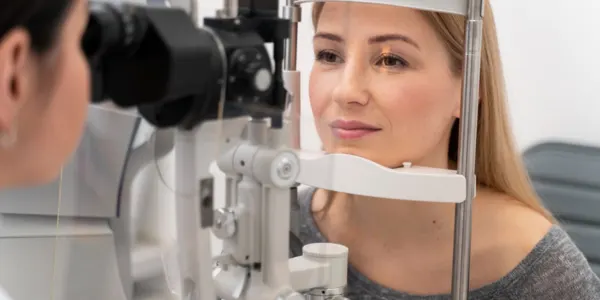
Diagnosing hypermetropia is straightforward and painless. An ophthalmologist typically performs:
- Visual acuity test – Reading letters from a standardised eye chart at varying distances
- Refraction test – Using a phoropter or automated refractor to determine the exact lens power needed
- Retinoscopy – Shining light into the eye to observe how it reflects off the retina
- Dilated eye exam – Eye drops widen the pupil for a clearer view of internal eye structures, particularly important in children
Regular eye exams are especially important for children, since young kids may not be able to articulate that their vision is blurry.
Treatment Options for Hypermetropia
The good news is that hypermetropia is highly manageable with the right treatment plan. Options include:
Eyeglasses
The most common and accessible solution. Convex (plus-power) lenses help redirect light so it focuses correctly on the retina.
Contact Lenses
These offer a wider field of vision compared to glasses and are a preferred choice for many active individuals.
Refractive Surgery
Procedures such as LASIK, PRK, or refractive lens exchange can permanently reshape the cornea or replace the eye’s natural lens to correct vision, often reducing or eliminating dependency on glasses.
Orthokeratology
A non-surgical option where specially designed rigid contact lenses are worn overnight to temporarily reshape the cornea.
Choosing the right treatment depends on age, the degree of hypermetropia, overall eye health, and lifestyle needs. An experienced ophthalmologist at a trusted facility like Prakash Hospital can guide you toward the most suitable option after a thorough evaluation.
Hypermetropia vs. Myopia: A Quick Comparison
| Feature | Hypermetropia (Farsightedness) | Myopia (Nearsightedness) |
|---|---|---|
| Definition | Difficulty focusing on near objects | Difficulty focusing on distant objects |
| Eyeball Shape | Shorter than normal | Longer than normal |
| Light Focus Point | Behind the retina | In front of the retina |
| Common Symptoms | Blurry near vision, headaches, eye strain | Blurry distance vision, squinting |
| Corrective Lens Type | Convex (plus power) | Concave (minus power) |
| Common in | Young children (often improves with age) | School-going children, often worsens with age |
| Risk Factors | Genetics, shorter eyeball, flatter cornea | Genetics, excessive near-work, longer eyeball |
Prevention Tips to Protect Your Eyes
While you cannot always prevent hypermetropia, especially when it’s caused by genetics or eye structure, certain habits support overall eye health and may help catch issues early:
- Schedule regular eye check-ups, particularly for children, since early detection prevents complications like amblyopia (lazy eye)
- Take breaks during screen time using the 20-20-20 rule — every 20 minutes, look at something 20 feet away for 20 seconds
- Maintain good lighting while reading or doing close-up work to reduce strain
- Eat a balanced, nutrient-rich diet with vitamins A, C, and E, along with omega-3 fatty acids, which support eye health
- Avoid rubbing your eyes excessively, which can sometimes affect corneal shape over time
- Wear protective eyewear during sports or activities with a risk of eye injury
- Don’t ignore symptoms like recurring headaches or squinting — get them evaluated promptly
When Should You See an Eye Specialist?
You should consult an ophthalmologist if you or your child notice persistent blurry near vision, frequent headaches linked to reading or screen use, unusual squinting, or eye discomfort that doesn’t go away with rest. Children should ideally have their first comprehensive eye exam before starting school, and then periodically thereafter, since undiagnosed refractive errors can affect learning and concentration.
If you’re noticing any of these signs, it’s worth booking a consultation rather than waiting it out. You can find more information and book an appointment here to get a proper diagnosis and personalized treatment plan.
Final Thoughts
Hypermetropia is a common, manageable refractive condition — not something to be alarmed about, but also not something to dismiss. Recognising the symptoms early, understanding the causes, and seeking timely treatment can make a real difference in day-to-day comfort and long-term eye health, especially for growing children.
The team at Prakash Hospital is equipped with experienced ophthalmologists and modern diagnostic tools to help you or your loved ones see clearly and comfortably again. Whether it’s a routine eye check-up or a more detailed evaluation for blurred vision, getting expert guidance early is always the better choice.
Frequently Asked Questions
1. What is hypermetropia in simple words? Hypermetropia, also called farsightedness, is a vision condition where nearby objects appear blurry while distant objects are usually seen more clearly, because light entering the eye focuses behind the retina instead of directly on it.
2. What are the main causes of hypermetropia? The main causes include a shorter-than-normal eyeball, a flatter cornea, genetics, certain age-related changes in childhood, and occasionally underlying medical or eye conditions.
3. Can hypermetropia be cured permanently? In many cases, hypermetropia can be effectively corrected with glasses, contact lenses, or refractive surgery. Some children’s mild hypermetropia naturally reduces as their eyes grow.
4. Is hypermetropia the same as presbyopia? No. Presbyopia is age-related and develops typically after 40 due to the natural lens losing flexibility, while hypermetropia is a structural refractive error that can occur at any age, including in young children.
5. What is the difference between the causes of myopia and hypermetropia? Myopia generally results from a longer eyeball or steeply curved cornea, causing light to focus in front of the retina. Hypermetropia results from a shorter eyeball or flatter cornea, causing light to focus behind the retina.